

About West Coast National Park
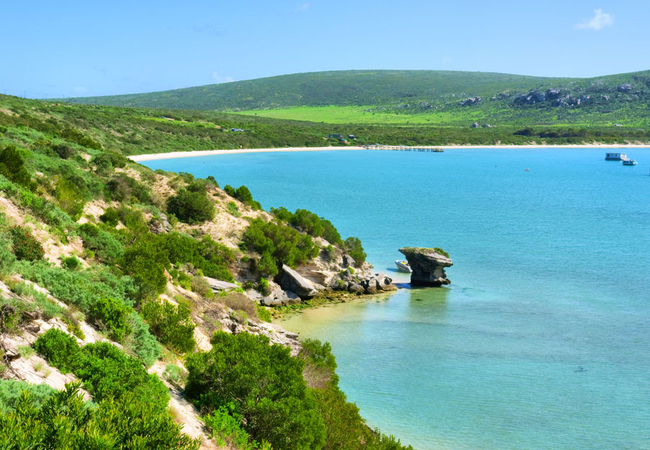
Just inland from the secluded harbour of Saldanha, a scenic hour and a half from Cape Town along the West Coast road, one finds the azure waters of the Langebaan Lagoon, focal point of the West Coast National Park.
Did you know? Head to Postberg where you can do the Postberg Flower Trail - a wonderful walk through a section of the park open only for a couple of months every year (August and September) during the flower season.
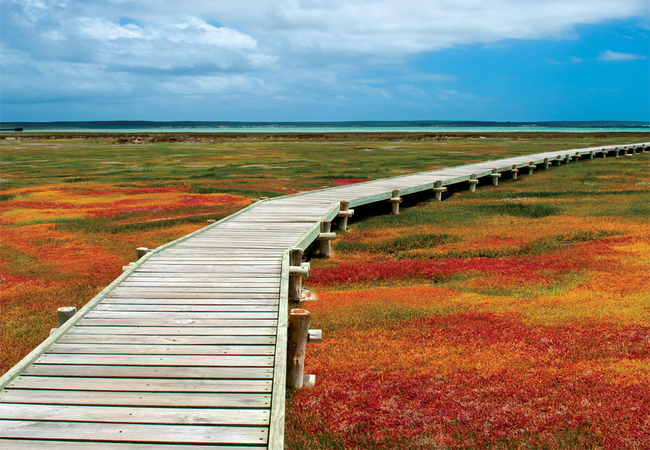
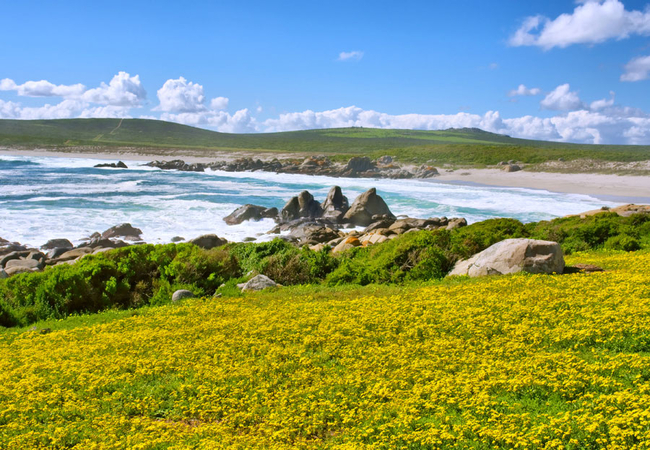
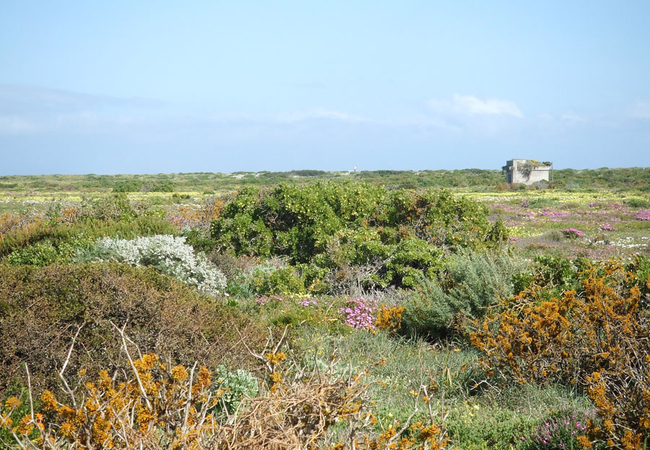
To describe the allure of the West Coast National Park is to celebrate how incredibly multifaceted it is. The cyan-coloured water of the vast lagoon meets the postcard-perfect white of the sand, rugged scrub erupts into a mosaic of colourful wild flowers every spring, and the wildlife that calls this home ranges from antelope and predators on land to the magnificent fish, mammals and sharks of the Atlantic Ocean. This is a place of contrast and magic – a place where colour, scale and variety all challenge your imagination.
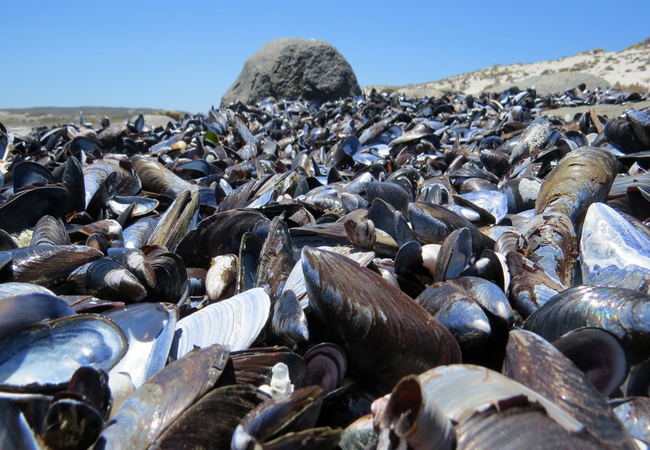
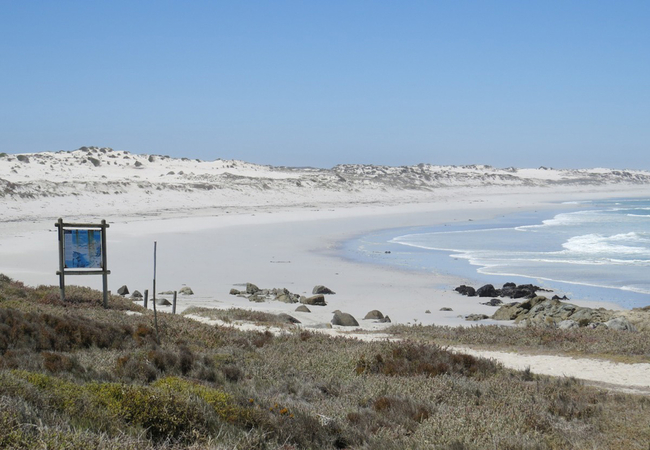
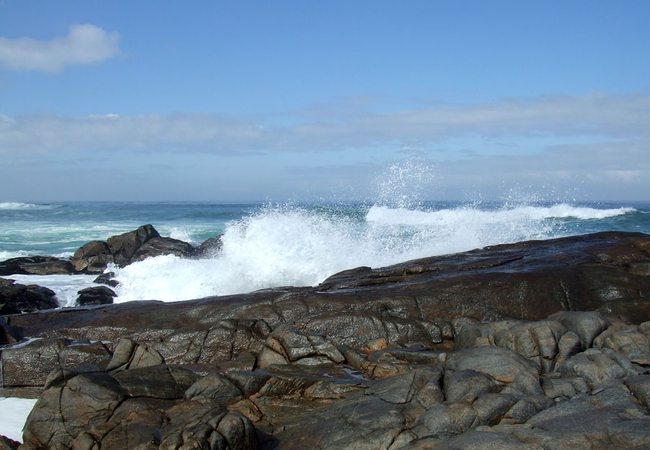
The West Coast National Park is situated just inland of Saldanha Bay and its secluded harbour. The exquisite Langebaan Lagoon is, undoubtedly, the jewel of this treasure trove, thanks to its breath-taking beauty and the variety of watersports that it offers. The lagoon is only a few kilometres from the powerful ebb and flow of the Atlantic Ocean, which crashes against rocks that glitter with enormous mussel shells, or laps lazily onto the sandy shores.
Wild Flowers
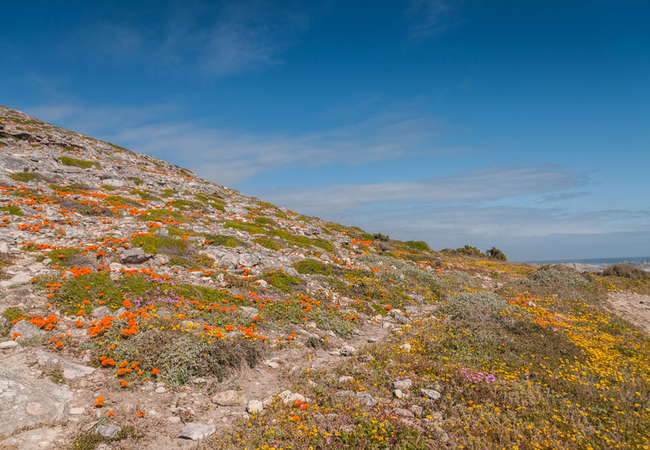
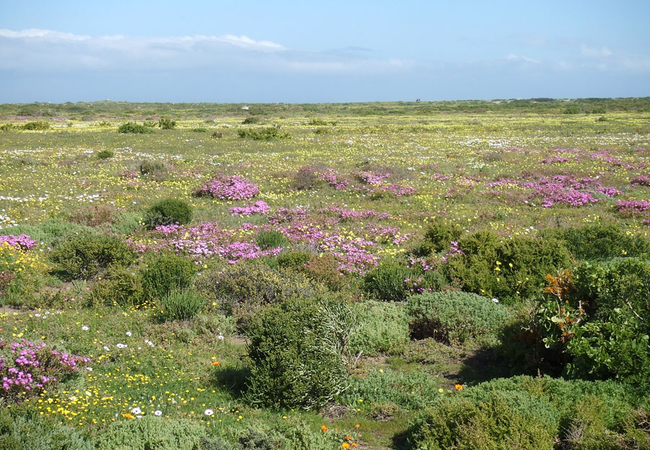
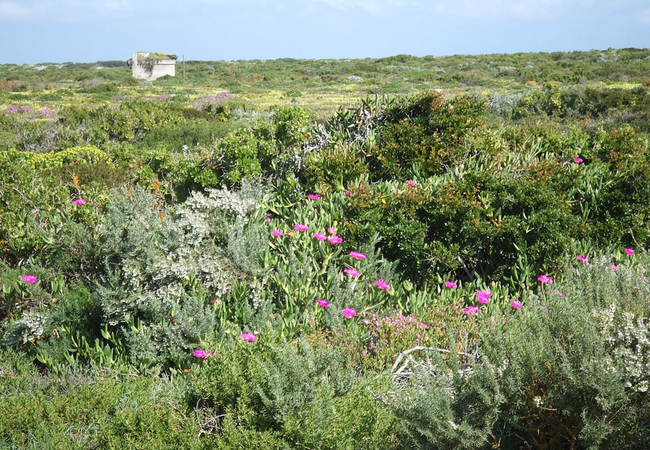
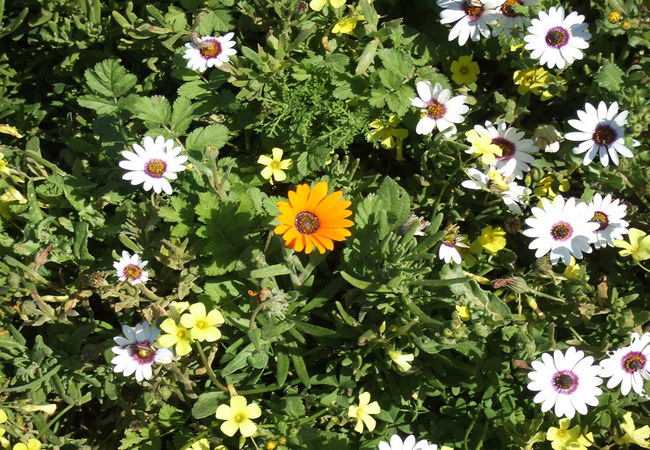
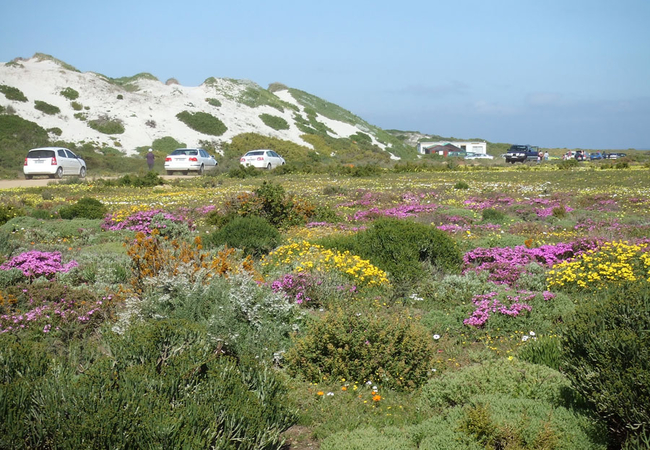
The West Coast is known for the magnificent colours of its wild flowers during August and September (depending on the rains). The Postberg Flower Reserve section of the national park is the ideal place to see the vibrant colours of the blooms as they spring out of the ground in a quilt of yellows, oranges, purples, pinks, reds and whites.
To explore Postberg is to immerse yourself in a wonderland of flora; where colours and textures all but overwhelm the senses and where the raw, untainted splendour of Africa cannot be ignored. To keep this area as beautiful as possible, the flower reserve is only open during this magical time, leaving it to recover for the remaining months of the year.
The Wildlife
The rest of the park is traversed by a variety of wildlife. These include the elegant eland and red hartebeest, the cunning caracal, cute rock hyraxes that sun themselves lazily, mountain zebra, steenbok, Cape grysbok, gemsbok, African wild cat, and bontebok.
Little Cape gray mongoose frequently dash across the road in their daily scurry, while the elusive bat-eared fox is a real treat to see in its natural environment. Self-driven tours are easy, thanks to the well-maintained roads and clear map provided at the entrance to the park. Because of the short, scrubby vegetation, the animals can often be seen quite easily.
Marine Animals
Heading to the shore, visitors may see a selection of wildlife that is entirely different to their terrestrial counterparts. Dolphins often leap from the water playfully, or glide through it as if on ice. The most commonly spotted dolphin species here is the Heaviside's dolphin. Gentle giants also make their appearance between about August and January. These are usually the southern right whales, but humpbacks and killer whales may also skirt this coastline.
The Birdlife
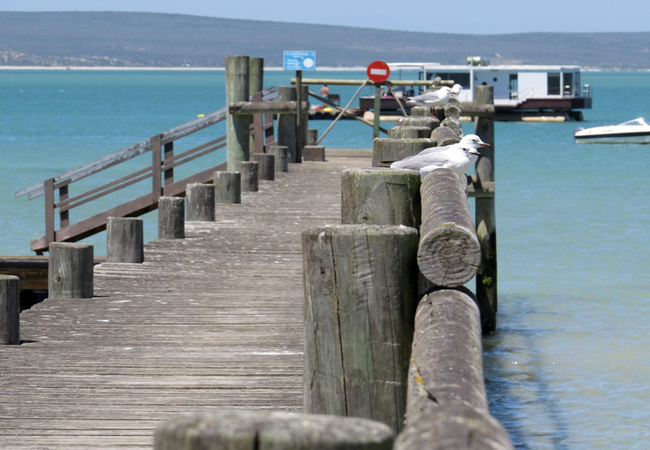
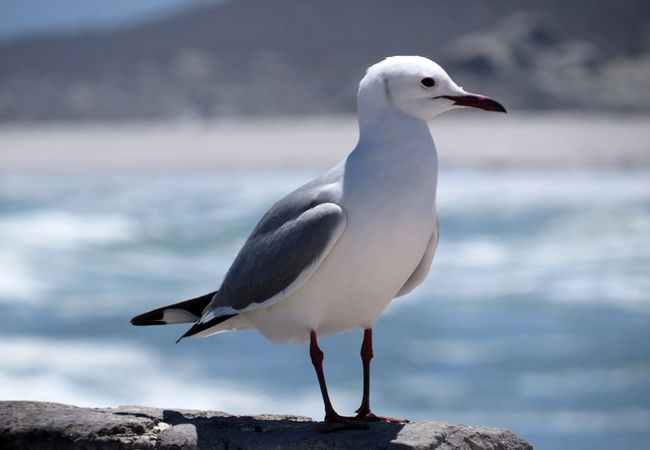
The beaches and lagoon are constantly abuzz with the swooping and diving antics of thousands of sea birds. So, it is not surprising that the Langebaan Lagoon is a Ramsar site, testifying to the incredible variety of wetland and migrant wader bird species to be found on and around it. Keen bird-watchers should look out for the little egret, South African shelduck, flamingo, Karoo lark, sandpipers, bokmakierie, plover, godwit, osprey, Cape gannet, African penguin, and white pelican.
For some excellent opportunities to see stunning birds, visit the Geelbek hide as the tide is coming in. The summer months are the most abundant for avian enthusiasts.
Watersports
The Langebaan Lagoon is a Mecca for kite surfers and wind surfers, thanks to the glassy water and perfect winds. Boating and waterskiing are also popular here. This lagoon is excellent for fishing too, and anglers can expect to catch the likes of white Steenbras, elf (also known as shad), cob, and white stumpnose. Even on days when the pickings are few, the breath-taking scenery makes the effort of sitting on the banks or boat well worth the while. Head into the deep ocean waters for an exciting day of fishing, and come back with geelbek, skates, yellowtail, dorado and tuna (big-eye, yellowfin, and longfin).
Trails
Discover a replica of the prehistoric footprints (dubbed Eve's footprints) that have been indelibly imprinted into what was once sea sand but has now formed rock at the Geelbek Information Centre. The main trail retraces “Eve's” footsteps across 30 kilometres of West Coast wilderness and takes 2.5 days to complete. It is fully portered and catered, and invites visitors into a world in which sleeping, eating and travelling are governed only by the movement of the sun across the sky and the tide as it comes and goes on the shore.
There are three legs to this trail:
1. Day One – an easy three-kilometre walk from Duinepos to the Fossil Dunes.
2. Day Two – a scenic circular route (16 kilometres long) from Geelbek to 16 Mile Beach.
3. Day Three – a 13-kilometre hike along the Langebaan Lagoon shores and up to the highest point in the park, Seeberg.
There are also cycling trails in the park, some of which are for road bikes and others for mountain bikes.
The West Coast National Park
The West Coast National Park is one of those South African attractions that have the very special ability to continue to surprise its visitors. There is drama in its landscapes, but there is also beauty in its subtleties.
You might also be interested in
Need to Know
WhereWest Coast National Park, Langebaan, Cape West Coast, Western Cape, South Africa
WhenDaylight hours.
Telephone+27 (0)22 772-2144 or +27 (0)22 772-2145
OvernightStay in Cape West Coast Accommodation, Western Cape
Disclaimer
Please note, business details can change. While we endeavour to ensure all information provided by the service provider is correct at the time of publication, we do not assume any liability caused by errors or changes, such as price, cost, time, and location. Please check with the provider that the activity/business is still offered as described, before making any travel plans.
Feedback?
If this is your reserve, you can let us know if anything on this page is outdated or contains inaccuracies, by email. We regret, we do not have any other information, please contact the provider if you have questions.
Game & Nature Reserves in Western Cape
In the vicinity
Hotels & other accommodation options in Cape West Coast
Millennial Arch @ 42
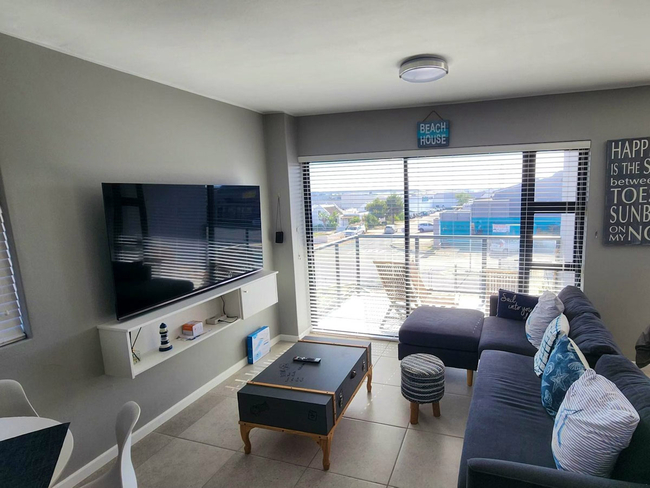
Millennial Arch @ 42 Apartment is a comfortable studio apartment located in Langebaan, within the sought-after Club Mykonos precinct. This well-a...
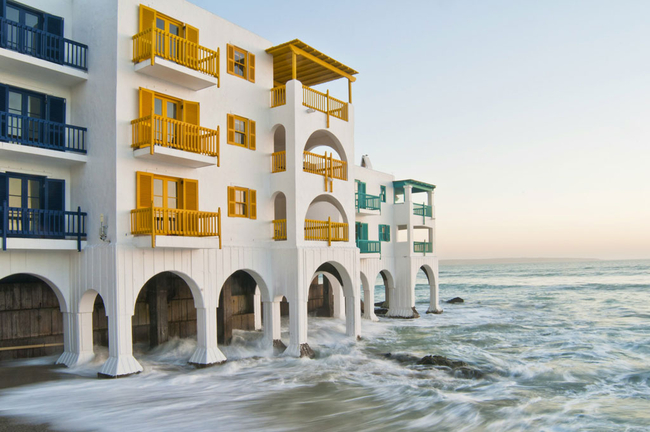
Club Mykonos Resort
Discover Club Mykonos, a charming Greek-inspired getaway nestled along the shores of the Langebaan lagoon. With its serene azure waters and pictu...
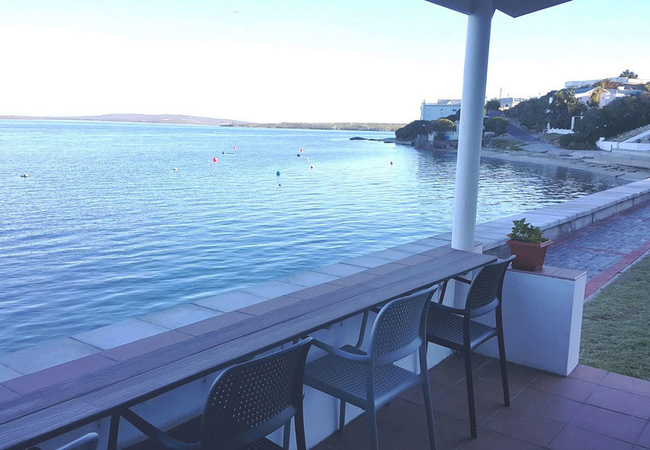
Sea Cottage On The Beach
SSea Cottage is located in central Langebaan on the lagoon front and is close to central town with all its restaurants and shops. This is a great...
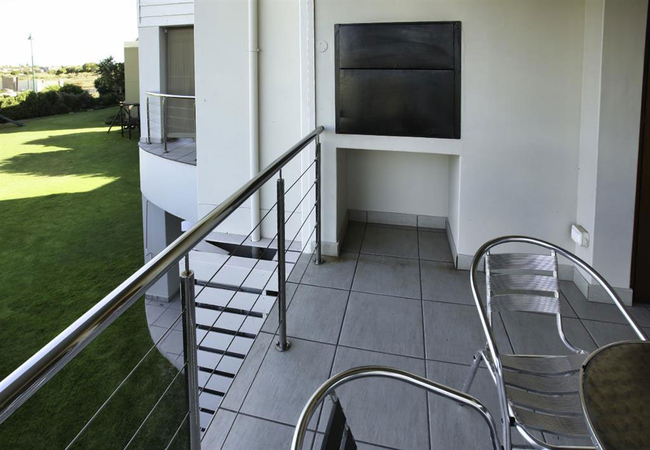
Ellefsen 106
Perfectly situated in the secure Ellefsen Golf Estate and within walking distance of the swimming clubhouse, Ellefsen 106 provides accommodation ...
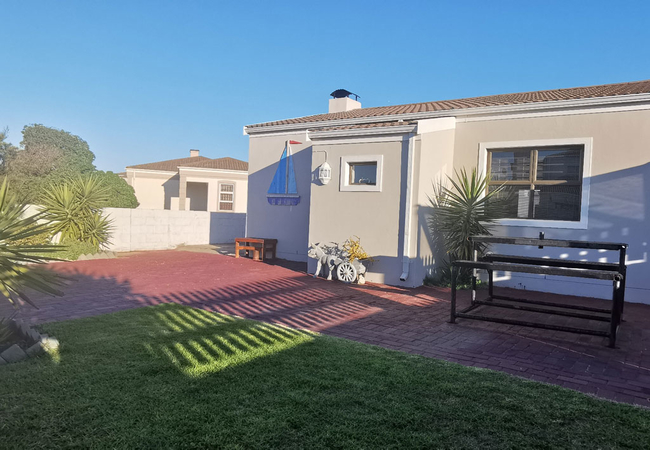
Langebaan Escape
Langebaan Escape offers accommodation in Langebaan, only an hour and a half from Cape Town, is the perfect distance from the city to get away. Th...
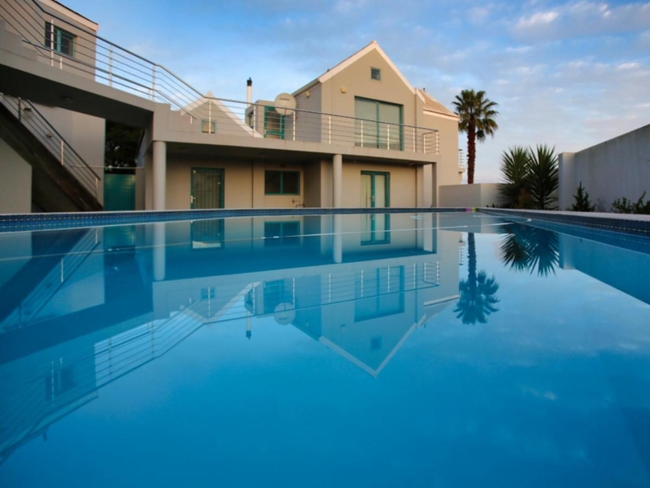
The Spry House
The Spry House offers delightful self-catering holiday accommodation in the heart of Myburgh Park, Langebaan. This charming property provides the...
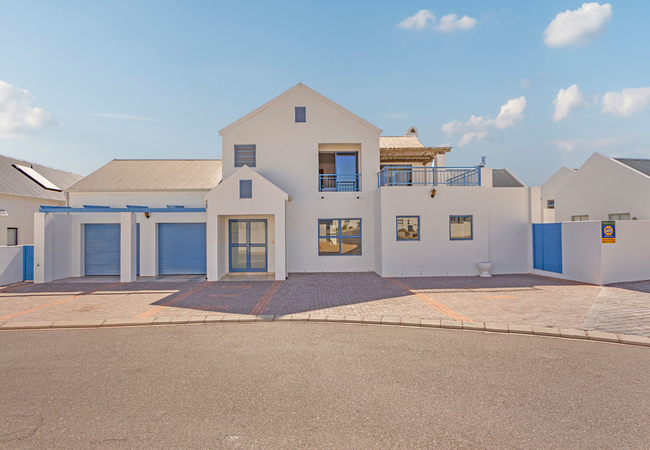
Oyster Retreat
Oyster Retreat is a house located in the friendly coastal town of Langebaan. The accommodation has the space, look and flow to suit all your need...
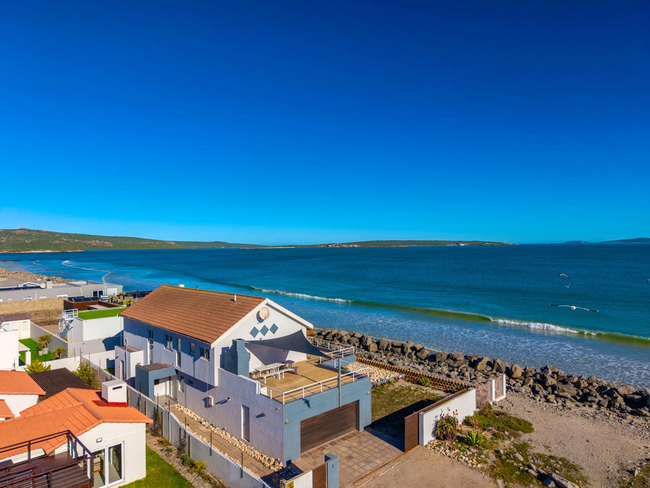
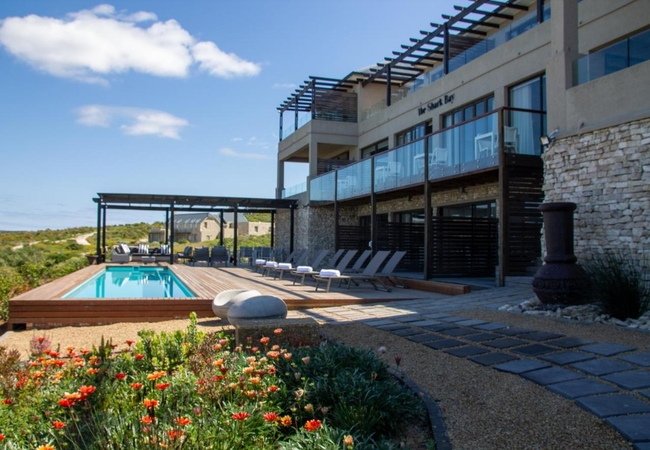
The Shark Bay Boutique Hotel & Spa
Enjoy a luxurious stay with your friends and family at The Shark Bay Boutique Hotel & Spa and share with them this popular town that's an hour fr...
Things to do in the area
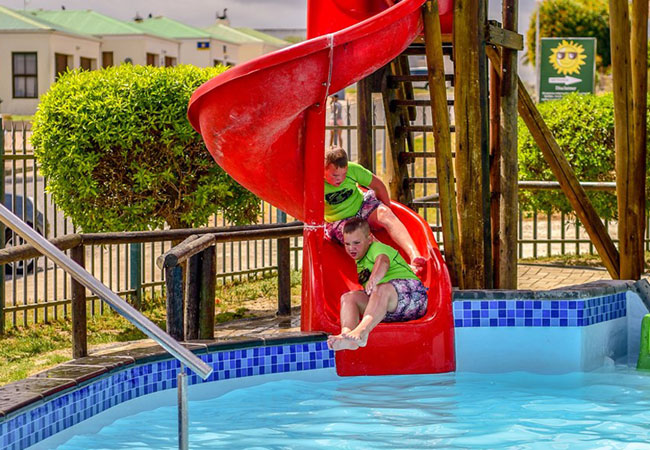
Sunnypark Fun Park
Langebaan, located on the picturesque West Coast, is a vibrant destination celebrated for its lagoon and the array of water-based activities it o...
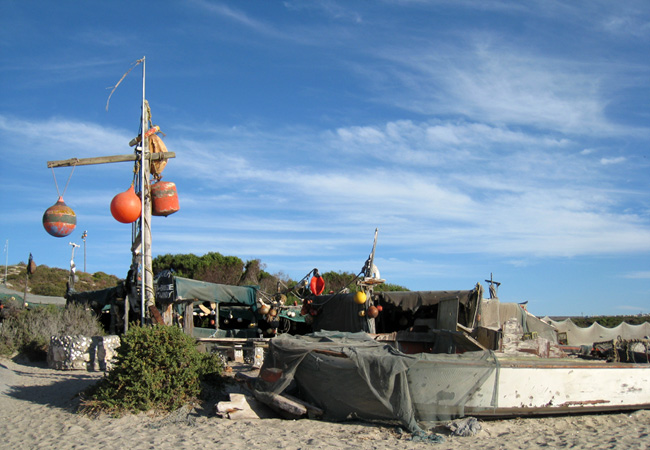
Die Strandloper Restaurant
Just 125km up the Cape West Coast you will find Die Strandloper, an open air, very casual restaurant with sand underfoot, blue skies above, and a...
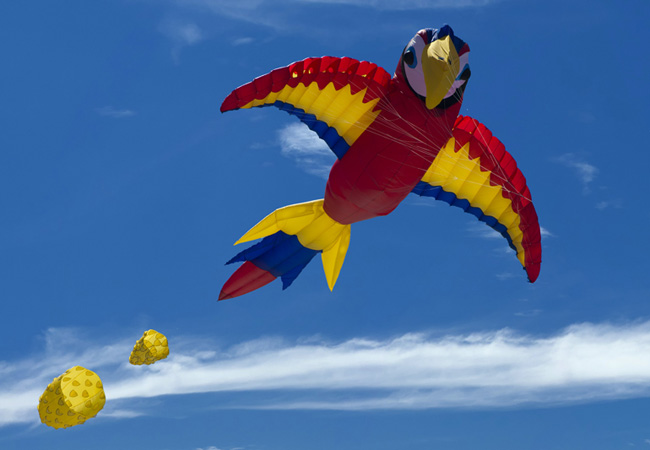
Fly a Kite on the beach
Replace tension with line-tension. Substitute skyscrapers for sky. Exchange attitude for altitude. Swap work for a play. Recycle hot air for a co...
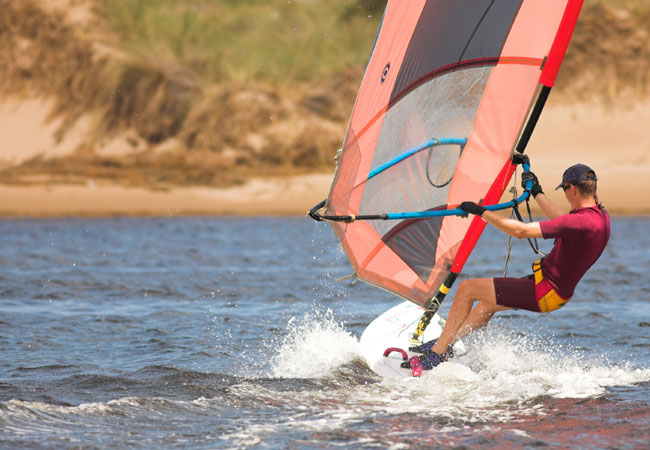
Windsurfing on the Langebaan Lagoon
The Langebaan Lagoon on the Cape West Coast is a favourite with locals, offering some of the best windsurfing in South Africa. Langebaan offers i...
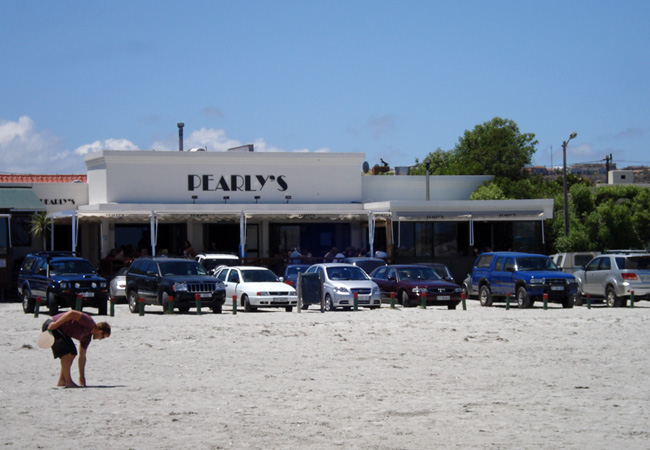
Pearly's on The Beach
Pearly's On The Beach, located in the heart of Langebaan, offers a laid-back yet refined dining experience with stunning views of the turquoise w...
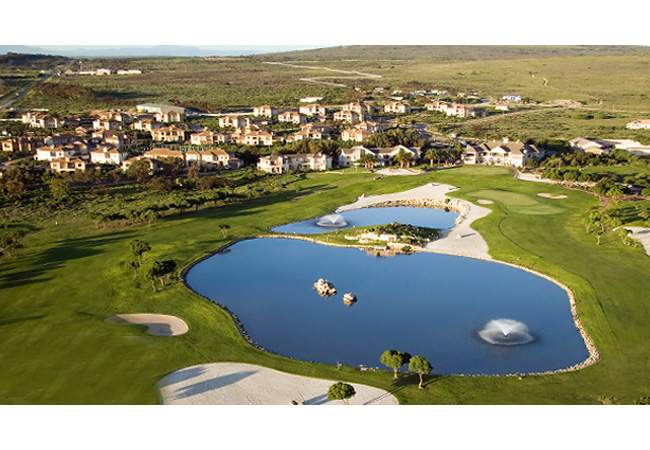
Langebaan Golf Course
Spend some time on the golf course at the Langebaan Country Club and see if you can get a hole in one!This course is a links-type course and was ...
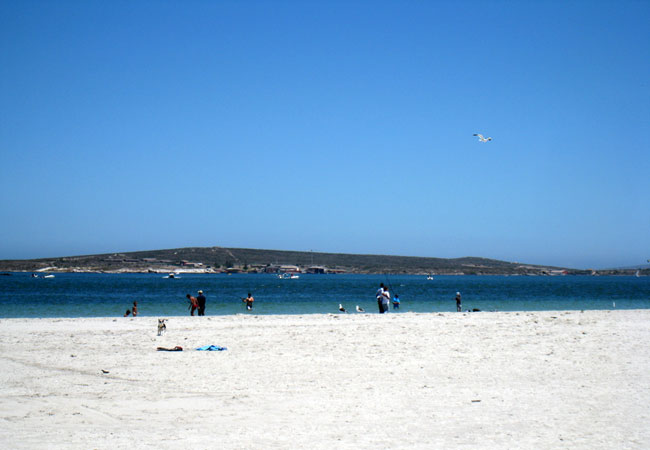
Calypso Beach
Calypso Beach in Langebaan is a hidden gem with a unique claim to fame: it’s one of the few traditional breeding grounds of the endangered black ...
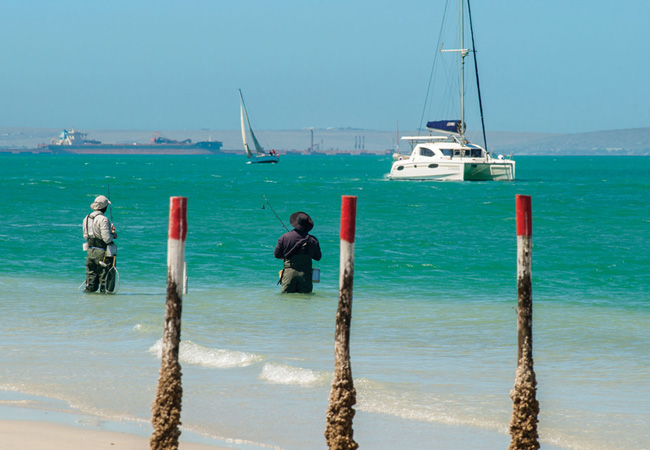
Langebaan Beach
The main beach in Langebaan is a wide stretch of white sand that extends as far as the eye can see. Make use of this distance and see how far alo...
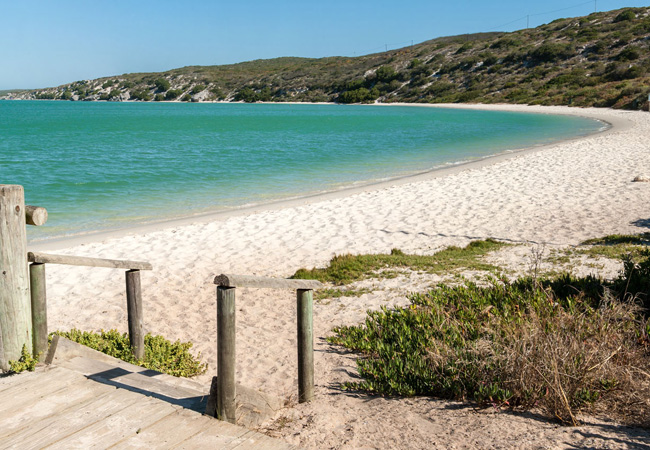
Kraalbaai Beach
You'll find Kraalbaai Beach in the ever popular West Coast National Park just prior to entering the restricted gates of the Postberg section of t...
Noteworthy attractions
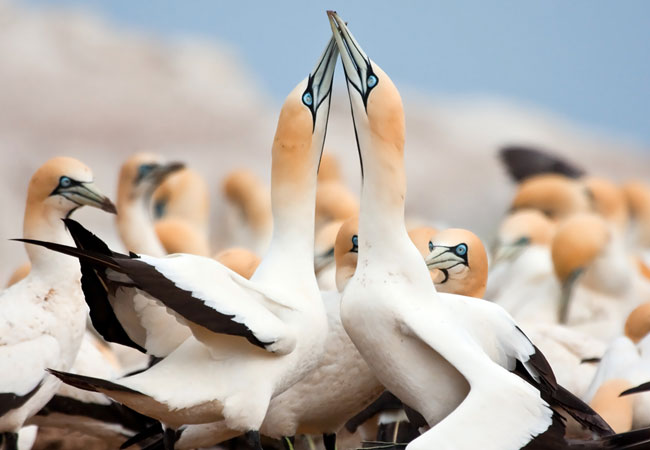
Bird Island Nature Reserve
The world's most accessible Cape gannet colony can be found on an island, linked to Lambert's Bay by a breakwater wall. Bird Island also gives sh...
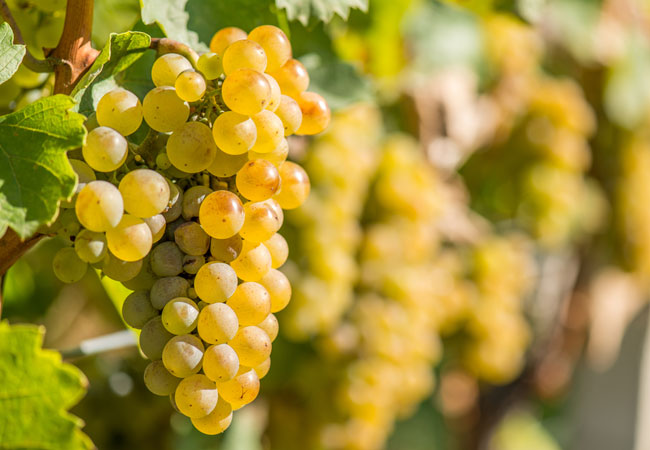
Darling Wine Route
Although traditionally part of the Swartland, Darling is now a demarcated wine district and home to her own wine route, including five wine cella...
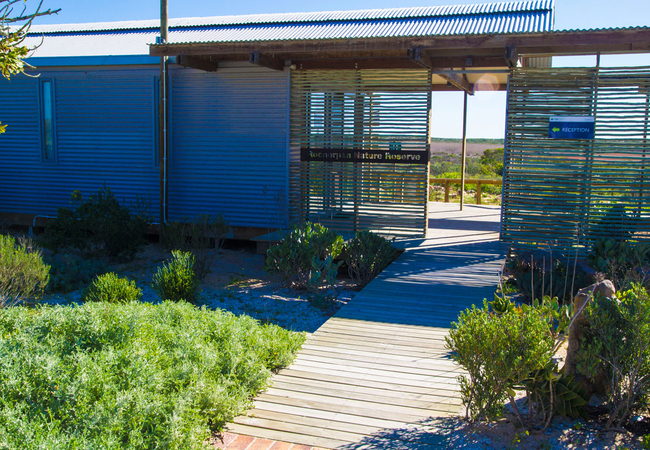
Rocherpan Nature Reserve
Rocherpan enthusiasts who head off along the West Coast to visit this nature reserve near Velddrif will possibly mention to you that the bird lif...

Langebaan Golf Club
The Golf Course at Langebaan Country Club is a links-type course, designed as a figure 8 winding around residential stands. Located on the unspoi...
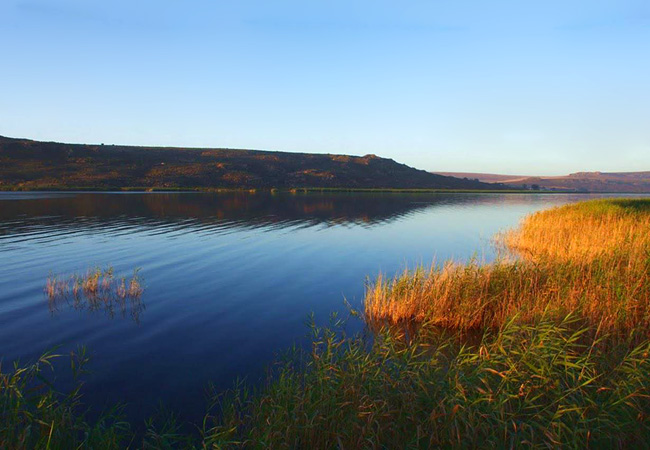
Verlorenvlei
Verlorenvlei is a long estuary stretching between the villages of Elands Bay and Redelinghuys, some 25 kilometres south of Lambert's Bay. It is n...
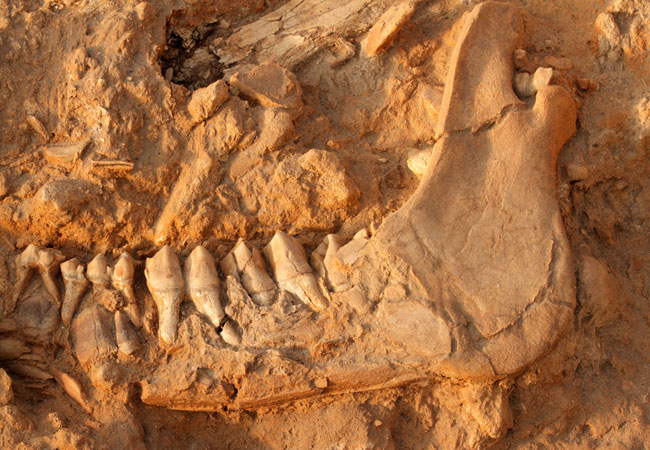
West Coast Fossil Park
For the visitor, the highlight of the West Coast Fossil Park is the 'live' exhibit of an ongoing excavation of early Pliocene fossils (fossils fr...
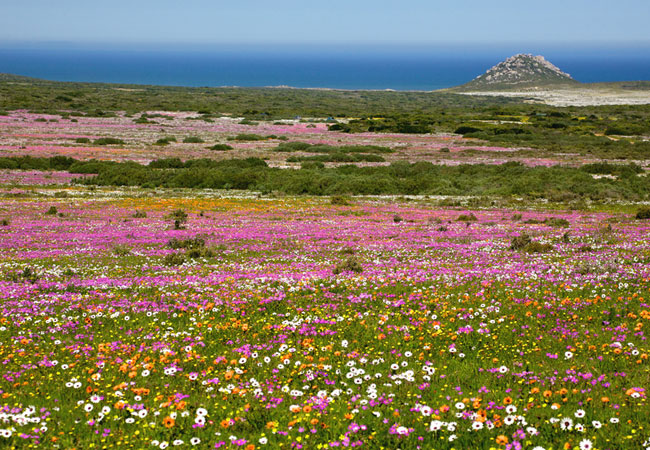
Postberg Flower Reserve
The Postberg Flower Reserve is not always available for you to visit. Even though it forms part of the West Coast National Park, this part of it ...

Darling Wind Farm
On the hills just outside Darling, roughly 70 kilometres from Cape Town, stand four wind-generated mills. It's known as an Eskom demonstrator sit...
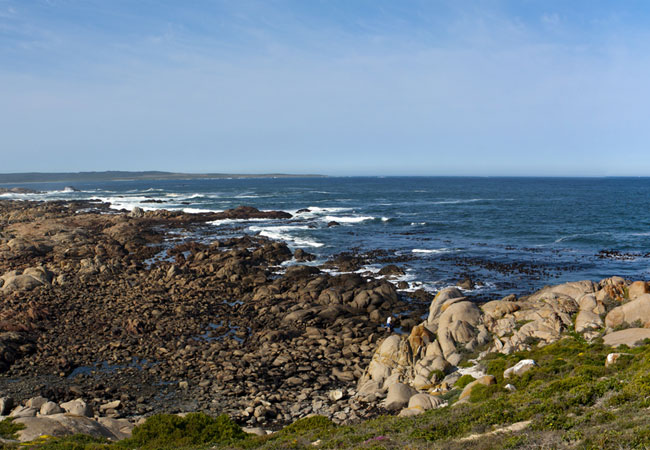
Cape Columbine Nature Reserve
Although often referred to as lying in Paternoster, the Cape Columbine Nature Reserve, more often referred to by locals as Tietiesbaai, lies just...
Accommodation near West Coast National Park
FIND / South Africa Accommodation / Western Cape Accommodation / Cape Town Accommodation / Cape West Coast Accommodation