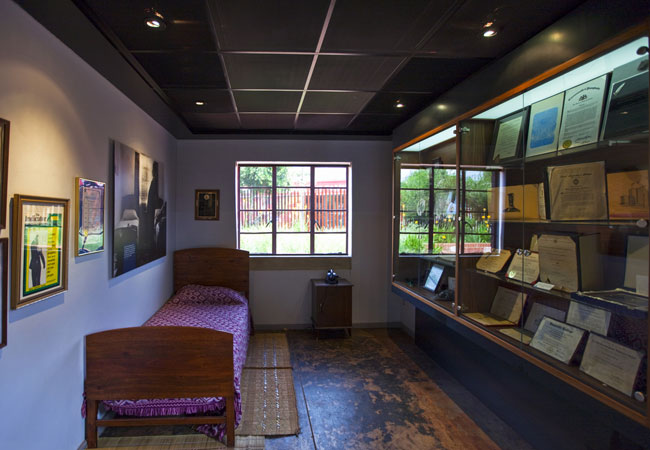
About Mandela House Museum
Nelson Mandela's humble house in Orlando West, Soweto, now called the Mandela Family Museum, is an interesting stopover for those keen to imbibe a slice of authentic history on the world's most famous former prisoner.
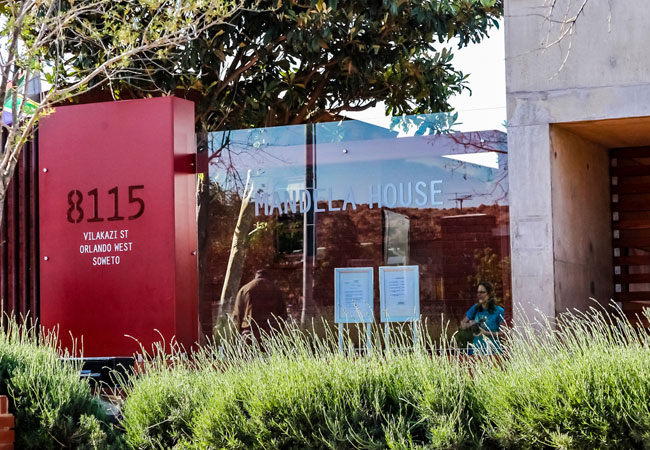
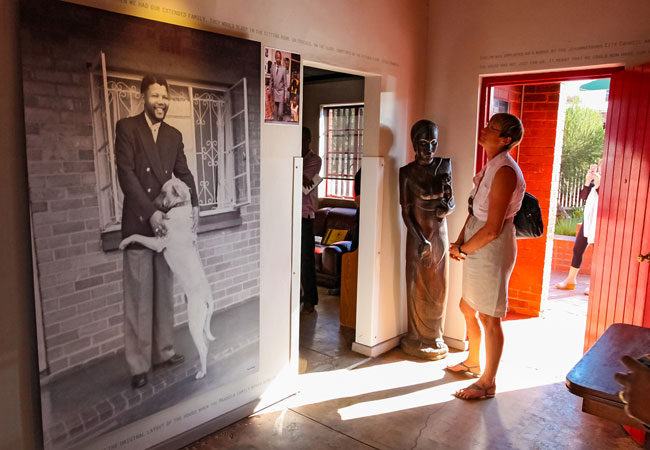
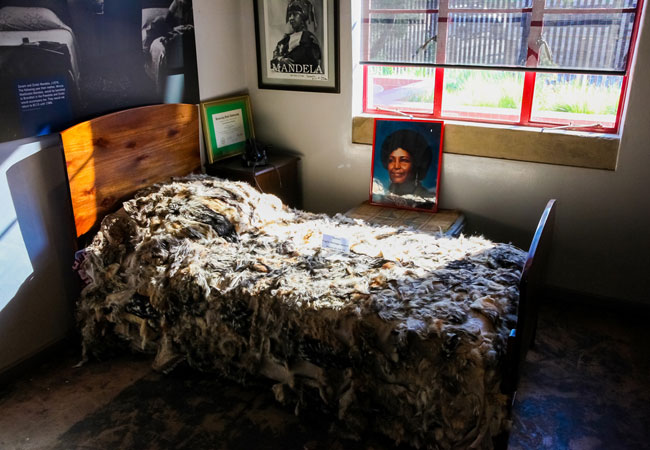
8115 Vilakazi Street, Orlando West in Soweto is known to many simply as Mandela House. It was where Nelson Mandela lived between 1946 and 1962. The house is a humble abode of four inter-leading rooms that today contain a collection of memorabilia, paintings and photographs of the Mandela family. Even a pair of Mandela's old boots lie on a shelf for display – insight into the man the country fondly called Tata (father). For today the house functions as a museum.
Did you know? Mandela describes in his The Long Walk to Freedom, how he knew that he had finally left prison when he returned here with his wife Winnie, for it was 'the place marked with an X in my mental geography'.
A red-brick 'matchbox' house built in 1945, bullet holes are still in evidence in the walls, as are scorch marks from petrol bombs thrown at the house whilst Mandela was in prison. He chose to return here despite having built a new home a little farther away in the interim, because this home was 'the house of his memories'.
Just up the road from this museum, is another famous house. Desmond Tutu also lives in Vilakazi Street. Around the corner is the Hector Pieterson Memorial, for it was here that the 1976 students' uprising began. Even closer to the Mandela home is the actual spot where Pieterson fell.
Did you know? Book your accommodation in Johannesburg ahead to avoid disappointment..
Mandela handed the house to the Soweto Heritage Trust, after divorcing Winnie Madikizela-Mandela. She, however, refused to relinquish it. Instead she turned it into the Mandela Family Museum and started a restaurant and pub across the road. The house was declared a national heritage site in 1999, and was again placed in the hands of the Soweto Heritage Trust. It has since been refurbished and renovated and includes a visitors' centre and various exhibits.
Some History about the Mandela Family Museum
The museum, a house comprising four inter-leading rooms, contains a rather higgledy-piggledy assortment of memorabilia, paintings and photographs of the Mandela family as well as a collection of honorary doctorates bestowed on Nelson Mandela from universities and institutions around the world. There's also a boxing belt from Sugar Ray Leonard, a multi-coloured cloak presented to the former president and a row of his old boots.
The matchbox home, at 8115 Ngakane Street, was Mandela's first house. He moved there with his first wife Evelyn Ntoko Mase in 1946. After their divorce in 1957, she moved out. When Mandela married Winnie Madikizela in 1958, she joined him at the Soweto home. However, during the ensuing years when his life as a freedom fighter was all-consuming, Mandela seldom stayed there. He was the "Black Pimpernel", living life on the run, until his arrest and imprisonment in 1962.
Madikizela-Mandela continued to live in the tiny house with her two daughters, Zeni and Zinzi, while Mandela was in jail. The house was petrol bombed and set alight several times during this time. When he was released, Mandela refused to move to the more opulent home (also in Orlando West) that Madikizela-Mandela had built during his incarceration. He wanted only to return to the house of his memories. However, after his release, he stayed there for a mere 11 days, as he was moved around from one location to the next until he settled into his Houghton residence.
Mandela separated from Madikizela-Mandela in 1992 and the couple were divorced in 1996. But, although her ex-husband handed the house to the Soweto Heritage Trust, Madikizela-Mandela refused to relinquish it. Instead she turned it into the Mandela Family Museum and set up a pub and restaurant across the road. During the inauguration of the museum, where bottles of "Mandela garden soil" were sold, Madikizela-Mandela said: "A lot of history was made here. This is where the 1976 students' uprising began, where the youth leadership met to change the face of South Africa."
Need to Know
WhereMandela House Museum, 8115 Vilakazi Street, Orlando West, Soweto, Johannesburg, South Africa
WhenThe museum is open daily from 09h00 to 17h00.
The museum is closed only on Good Friday and Christmas Day.
Telephone+27 (0)11 936-7754
OvernightStay in Soweto Accommodation, Gauteng
Disclaimer
Please note, business details can change. While we endeavour to ensure all information provided by the service provider is correct at the time of publication, we do not assume any liability caused by errors or changes, such as price, cost, time, and location. Please check with the provider that the activity/business is still offered as described, before making any travel plans.
Feedback?
If this is your attraction, you can let us know if anything on this page is outdated or contains inaccuracies, by email. We regret, we do not have any other information, please contact the provider if you have questions.
Additional Reading
You might also be interested inNelson Mandela
Fascinated with Past President Nelson Rolihlahla Mandela? Nelson Mandela is one of the world's most remarkable leaders. Find out more about his past and his impact on South Africa's present and future, and follow in his footsteps with our curated Mandela Route of South Africa.
A Tribute to Nelson Mandela
The Mandela Route
In the vicinity
Hotels & other accommodation options in Soweto
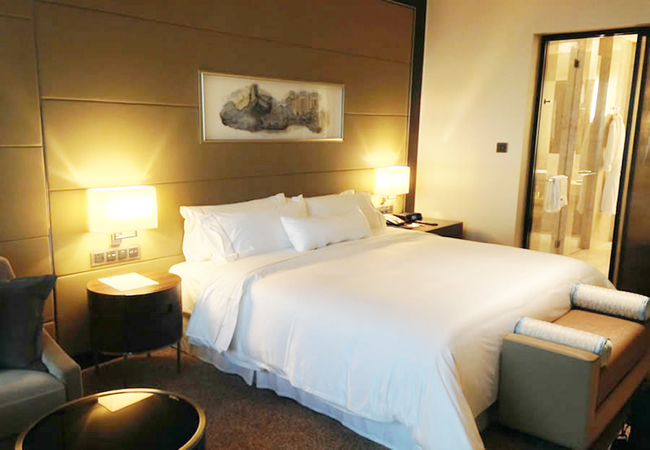
Botle's Guest House
Come and experience some truly South African hospitality and friendly service at Botle's Guest House in Soweto. Relax and enjoy excellent, yet af...
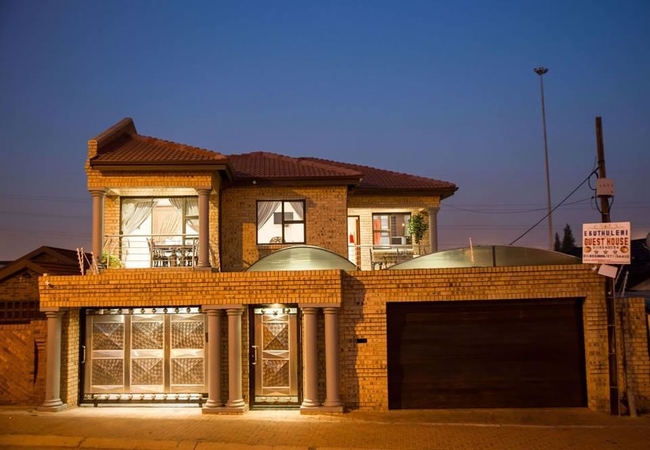
Ekuthuleni Guest House Soweto
Ekuthuleni Guest House offers accommodation in a double-storey mansion, with a Soweto influenced interior that's inviting and has a 'home away fr...
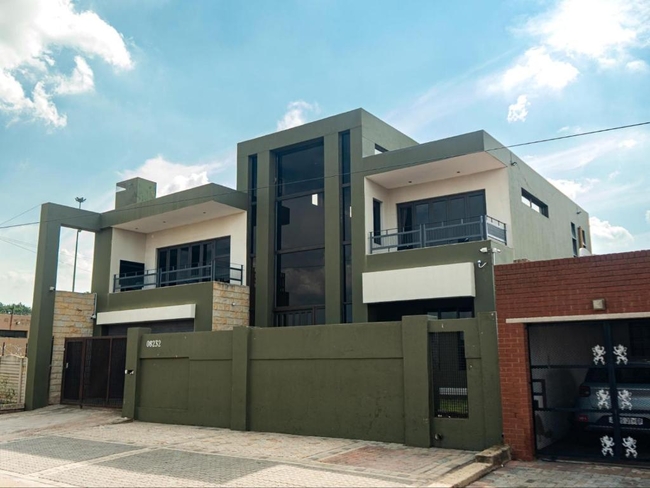
Soweto Boutique Hotel
For both corporate and recreational travellers, Soweto Boutique Hotel presents a sophisticated yet economical accommodation choice that maintains...
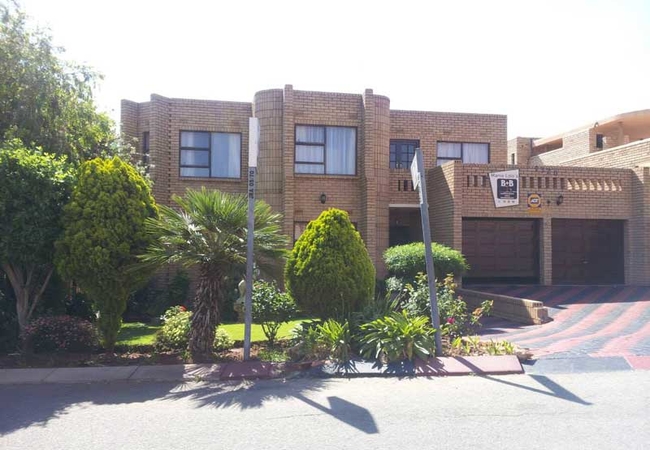
Lolo's Guest House
Situated in Diepkloof, which forms part of South Africa's most famous township, Soweto, Lolo's Guest House offers accommodation facilities and se...
Things to do in the area
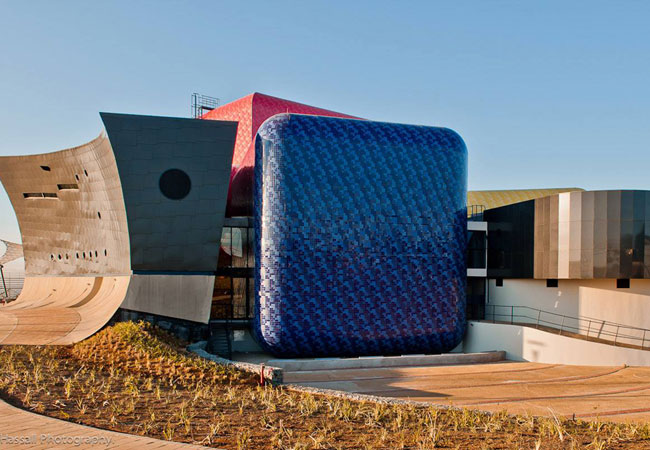
Soweto Theatre
Soweto was the largest township in South Africa before its incorporation into Johannesburg. Today, the Soweto Theatre is owned by the City of Job...
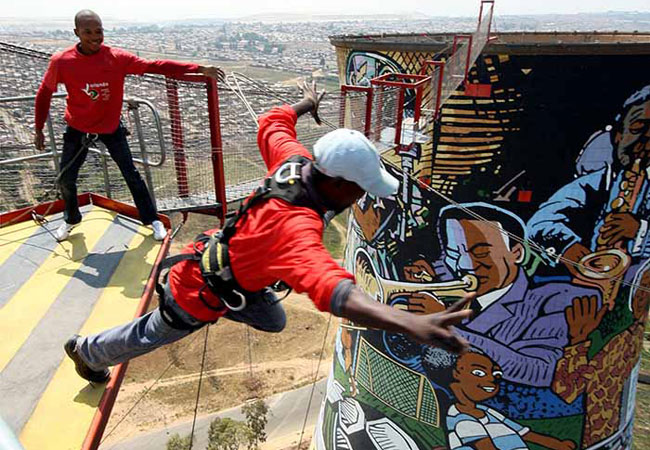
Power Swing across Soweto
Feel the power of gravity now where the power of electricity stood before. Free fall into a town that has arisen. The decommissioned cooling towe...
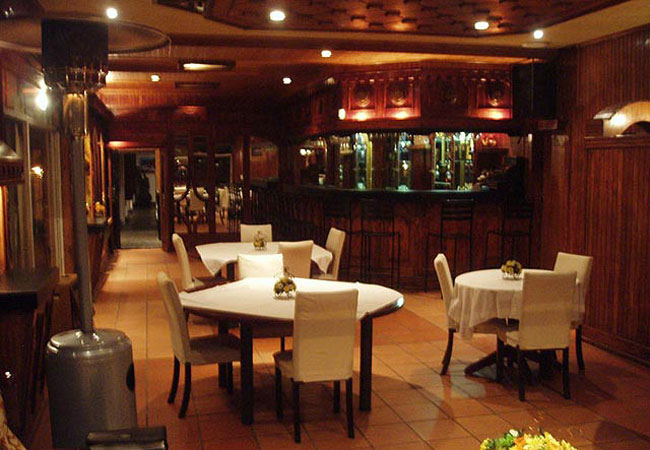
Roots Restaurant & Gallery
Roots, which seats 100 patrons, attracts local residents and tourists alike because it not only serves genuine township food but has an added v...
Soweto Tour
Visit Soweto, the biggest and most vibrant township in South Africa, which is increasingly becoming one of the most popular tourist destinations ...
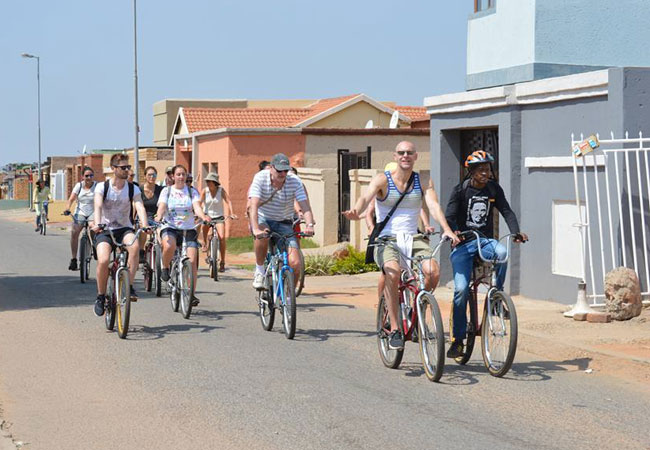
Tour de Soweto by Bicycle
Looking for a different way to explore Soweto? Jump on a bike at Lebo's Soweto Backpackers for a guided tour of the places, people and culture.Th...
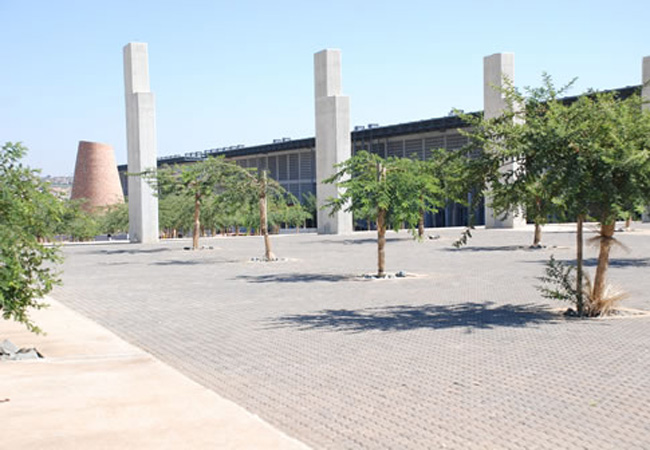
Walter Sisulu Square
Walter Sisulu Square in the heart of Kliptown, Soweto, is South Africa's first township entertainment explosion centre, the very first of its kin...
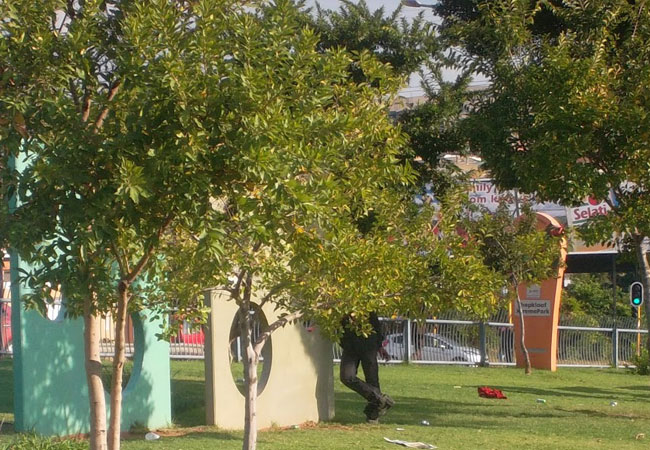
Diepkloof Park
The suburb famous for the Soweto Wine Festival and one of the founding places of kwaito (a style of hip-hop specific to South Africa) and where a...
Dorothy Nyembe Park
Set in Mofolo North, in Soweto, Dorothy Nyembe Park is a 26-hectare area that you will know it by the unusual sculpted figurines that stand four ...

Kremetart Park
Kremetart Park lies in a street of the same name in Eldorado Park Ext 3, between Kiaat and Boekenhout streets on the site where once a field stoo...
Accommodation convenient to Mandela House Museum
FIND / South Africa Accommodation / Gauteng Accommodation / Johannesburg Accommodation / Soweto Accommodation