Blue Crane

Anthropoides paradisea - The Blue Crane
The Blue Crane, the national bird of South Africa, has declined mostly due to loss of habitat (human population growth), direct and indirect poisoning and power-line collision. It's population appears to stable, but it is still vulnerable and listed as such by the IUCN.
Did you know? There are only about 25,000 Blue Cranes left in the world, around half of which can be found in the Cape Overberg.
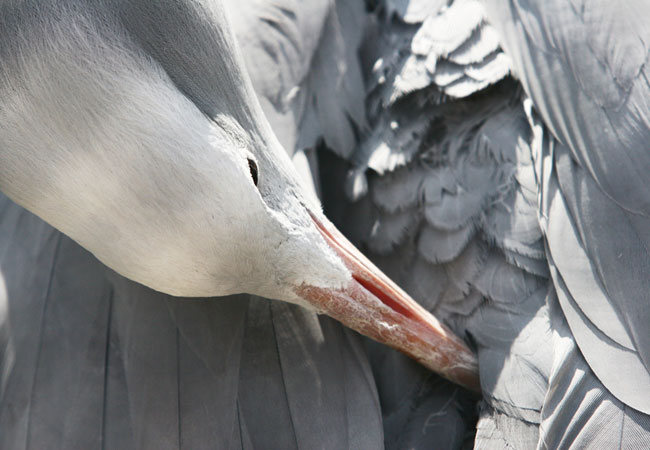
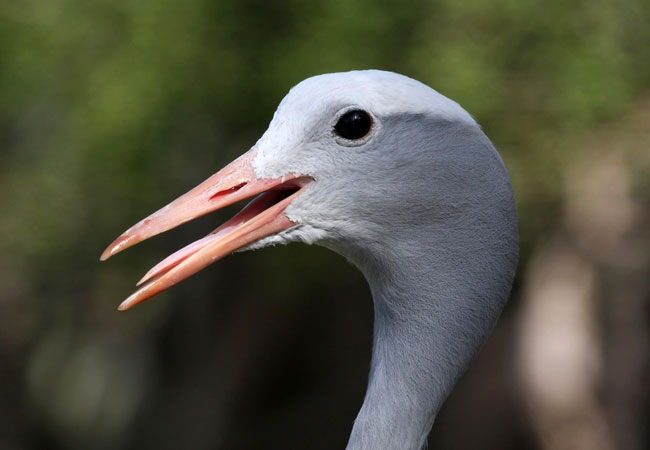
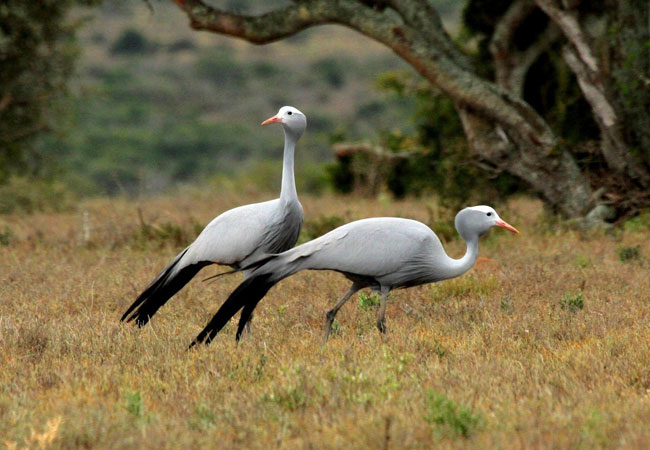
One of the smaller crane species, the Blue Crane's plumage is silvery bluish gray becoming darker on the upper neck and the lower half of the head and nape.
Did you know? The Blue Crane is also known as the Stanley Crane and the Paradise Crane.
The feathers of the crown and forehead are light grayish white, while the cheeks, ear coverts and nape are dark ashy gray, which they raise (or fluff) during threat displays, producing a distinctive cobra-like look. Blue Cranes have short bills and black legs. The primary feathers are black or slate gray. The tertial feathers of the wing are long, dark and dangle nearly to the ground, giving this crane an elegant appearance.
Size
Weight: 3.6 - 6.2 kg.
Height: 110 - 120 cm.
Wingspan: 180 - 210 cm.
Habitat
The Blue Crane is a bird of dry grasslands and other upland habitats. Where shallow wetlands are available, Blue Cranes will roost and feed in them.
Distribution
Blue Crane are endemic to southern Africa, with more than 99% of the population occurring within South Africa. A small breeding population of approximately 60 individuals exists in northern Namibia, in and around the Etosha Pan. This beautiful bird can be seen quite extensively around South Africa. Often, it can be spotted pecking the grasses along the sides of major motorways. But, to see it in some of the formal parks and reserves, visit the Kwandwe Private Game Reserve (two hours from Port Elizabeth), the Kirstenbosch Botanical Gardens in the heart of Cape Town, Austin Roberts Bird Sanctuary in Pretoria, and the Natal Zoological Gardens (about an hour from Durban).
Diet
All cranes are omnivorous. Principal foods of the Blue Crane include the seeds of sedges and grasses, waste grains, insects, and small vertebrates.
Socialisation
All cranes engage in dancing, which includes various behaviors such as bowing, jumping, running, stick or grass tossing, and wing flapping. Dancing can occur at any age and is commonly associated with courtship, however, it is generally believed to be a normal part of motor development for cranes and can serve to thwart aggression, relieve tension, and strengthen the pair bond.
Communication
Mated pairs of cranes engage in unison calling, which is a complex and extended series of coordinated calls. The birds stand in a specific posture, usually with their heads thrown back and beaks skyward during the display. The male always lifts up his wings over his back during the unison call while the female keeps her wings folded at her sides. In Blue Cranes the male initiates the display and utters one call for each female call.
Reproduction
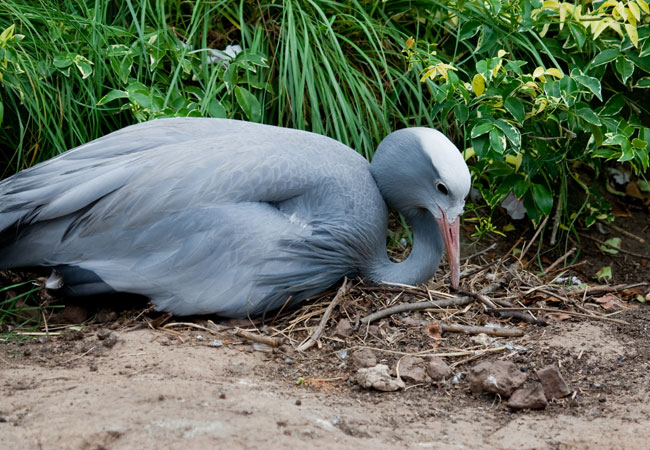
Preferred nesting sites of Blue Cranes include secluded grasslands in higher elevations where eggs are laid amid the grass or on the bare ground. In agricultural areas, they nest in pastures, in fallow fields, and in crop fields when stubble becomes available after harvest. Females usually lay two eggs and incubation (by both sexes) lasts 30-33 days. The male takes the primary role in defending the nest against possible danger. Chicks fledge (first flight) between 3-5 months of age.
Incubation
Incubation lasts 30 - 33 days.
Life Expectancy
20 to 30 years (Confirmation required).
Predators
Cape clawless otter.
Wish you were here?

Additional Reading
You might also be interested inWhere to see Blue Crane in their natural habitat?
Want to see Blue Crane in their natural habitat? In South Africa, the blue crane is most prolific in the Cape Overberg Region but can also be seen in these reserves, parks and gardens...
Blue Crane
Birdlife
- Birders from around the world come to South Africa to experience the great variety of typically African birds, migrants, endangered, and endemic birds.
- Endemic and Near-Endemic
- Other Notable Species
- African Darter
- African Fish Eagle
- African Hoopoe
- African Jacana
- African Sacred Ibis
- African Scops Owl
- African Spoonbill
- Barn Owl
- Bateleur Eagle
- Bearded Vulture
- Black-headed Heron
- Black-shouldered Kite
- Blue Waxbill
- Common Waxbill
- Crested Barbet
- Egyptian Goose
- Glossy Ibis
- Great White Pelican
- Greater Flamingo
- Grey Crowned Crane
- Grey Heron
- Hadeda Ibis
- Helmeted Guineafowl
- Kori Bustard
- Lappet-faced Vulture
- Lilac Breasted Roller
- Little Bee-eater
- Little Egret
- Malachite Kingfisher
- Marabou Stork
- Martial Eagle
- Ostrich
- Pel's Fishing Owl
- Saddle-billed Stork
- Secretary Bird
- Southern Ground Hornbill
- Spotted Eagle Owl
- Wattled Crane
- Birder-Friendly Lodging
- Game Reserves
Tips & Information for Tourists
- Travelling to South Africa? We make it easy for you to plan your trip online. We have some useful tips for tourists and then start planning your trip with our introduction to South Africa.
- By Province
- Getting to South Africa
- Getting Around in South Africa
- South Africa's Climate
- Exchange Rates and Currency
- Maps / Atlas
- Malaria Risk Areas
- Wildlife
- Birdlife
- Plant Life
- Languages and Culture
- South African Cuisine
- Top Attractions in South Africa
- Popular Tourist Routes
- Find a Hotel
SA-Venues.com® has been assisting travellers with their South Africa travel plans since 1999, and is the largest, independent online travel guide for South Africa available in both English and German.
SA-Venues.com © 1999-2026. All Rights Reserved. Find and book hotels and accommodation in South Africa. Sitemap