The Cape Whale Coast Region, Western Cape
The coming of the whales to the Western Cape's southern coastline, also known as the Cape Whale Coast, every year between June and November, not only creates a stir, but brings to our shores a large, intelligent and remarkable giant of the sea and the only mammal to have adapted to life in the open oceans.
Did you know? Once you've booked your hotel or Cape Whale Coast accommodation, explore the destination pages below for info on attractions, activities and things to do when you explore the Whale Coast.
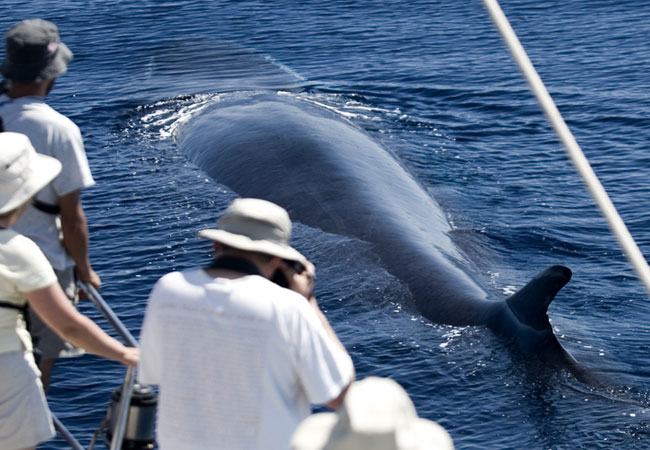
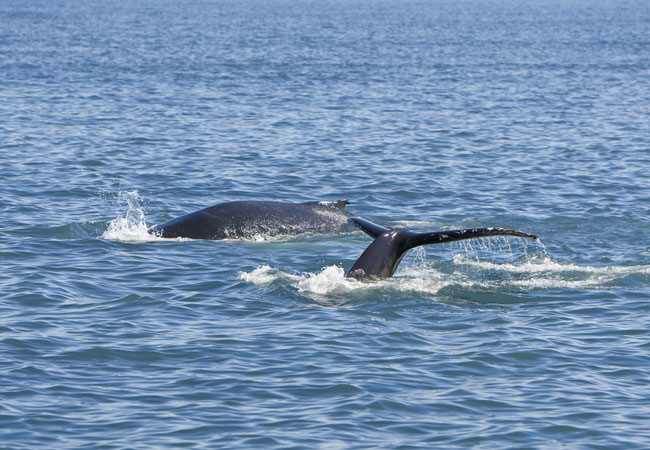
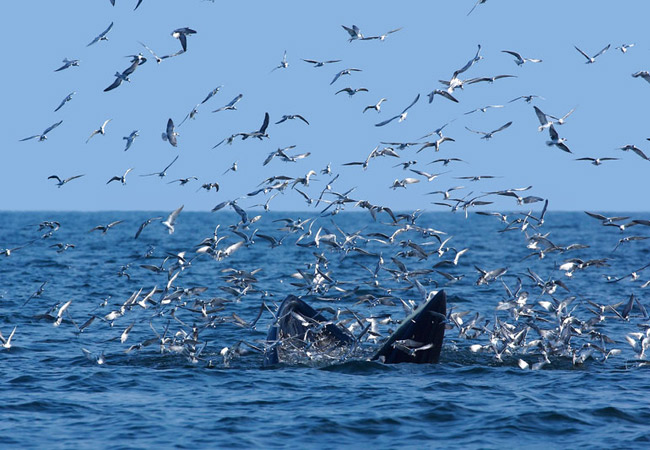
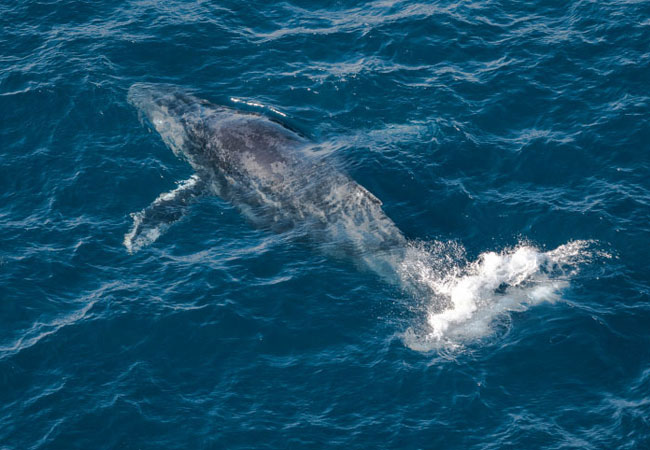
Whales, including the Southern Right Whale and less commonly the Bryde's (pronounced 'broodess') and Humpback Whale, are frequently sited along the Cape Overberg Coast from Stony Point near Betty's Bay, along the cliff paths of Kleinmond, Onrus, Walker Bay, the De Hoop Nature Reserve and Witsand. These gentle giants spend summer feeding around Antarctica and then migrate thousands of miles to our waters where the sheltered bays of the South African coast provide perfect refuge to mate and calve.
The Overberg coastline is the meeting place of two oceans - the Indian and Atlantic. Two major ocean currents - the cold Benguela wells up in the west and the warm Agulhas Current in the east - create a number of conditions, which, combined with South Africa's proximity to the southern ocean, result in a rich marine life including as many as 37 species of whales and dolphins to South Africa's coastline. By comparison, the whole north Atlantic attracts only 28 species.
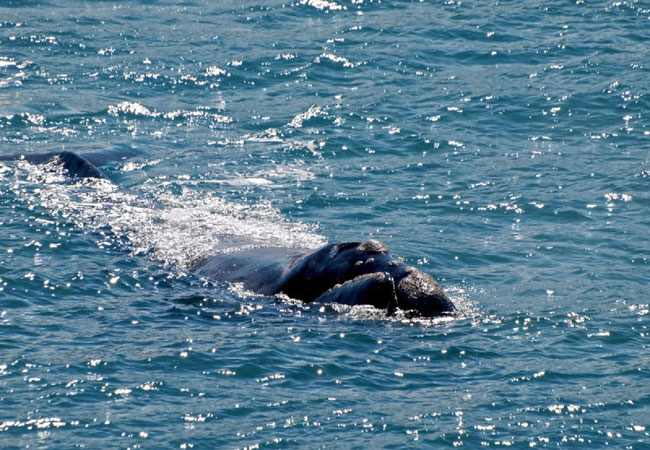
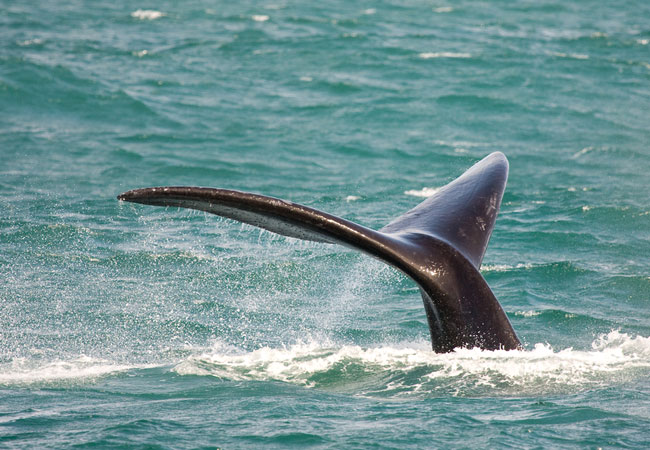
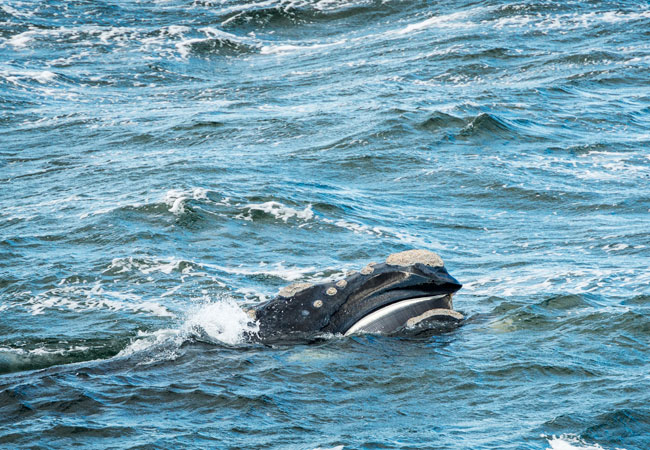
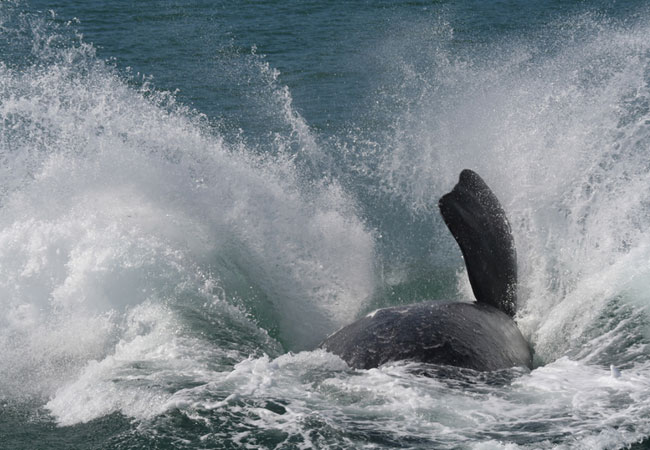
The Southern Right Whale can weigh up to 60 tonnes, averages 14 metres in length, lives to about 100 years and has the most highly-evolved mammalian brain on earth. They are huge - rounder and heavier than the Humpback or Bryde's whale - and only smaller than the blue whale. They are characterised by their gentle slowness, lack of dorsal fin and rough patches of skin called callosities on their heads. These are covered with whale lice and, as each whale has a unique callosity pattern, are often used to identify individual whales.
The Southern Right Whale population was virtually decimated during the whaling years - an estimated 20 000 of these beautiful mammals are said to have been slaughtered. There has been active protection in South African waters since 1935 and the population is slowly restoring itself. There are now close to 4 000 of these languid beasts - a large proportion of which grace our shores every year. They swim within 200 metres of the shore-line between June and November (as opposed to the Humpback which prefer deeper waters) and sightings of mother and calf are especially common. In Walker Bay, in places like De Kelders, they come as close as 20-30 metres from the shore and never fail to fill hearts and minds with wonder at their magnificence.
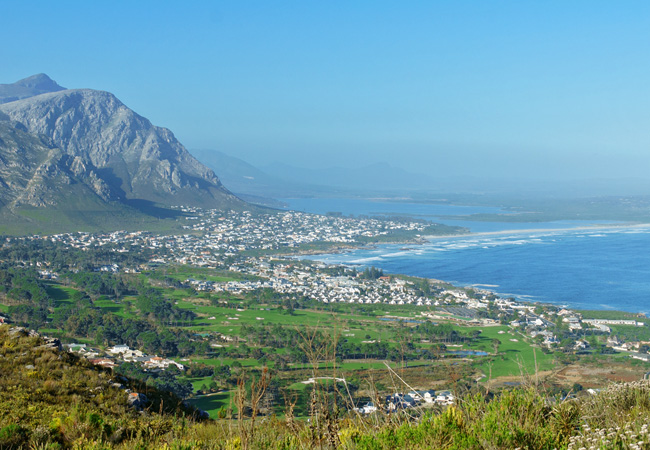
The entire Cape Overberg coastline offers generous sightings of the whales and the Walker Bay area, between Gansbaai and Hermanus, is a whale sanctuary. Hermanus arguably offers the best land-based whale watching in the world. For this position it competes only with Plettenberg Bay, further along the coast. Not only does Hermanus boast the world's only ‘whale crier', but there is a 14 km cliff path that offers a bird's eye view of the 100 or so Southern Right Whales that visit Walker Bay every year and often come within five to ten metres of the coast. Hermanus celebrates the arrival of the whales with an event-filled annual Whale Festival in late September.
The 'big two' town of Gansbaai offers both Great White Shark and Southern Right Whale viewing, east and west of the Danger Point peninsula respectively and De Kelders, a suburb of Gansbaai, offers a hiking trail along its cliffs which allows fantastic views of the protected coves in which the whales wallow and approach very close to the shore. Cape Agulhas is equally rewarding as the bay attracts a number of pairs of mother and calf at a time and Pearly Beach has a protective, shallow bay offering the whales a sanctuary in which to mate and calve.
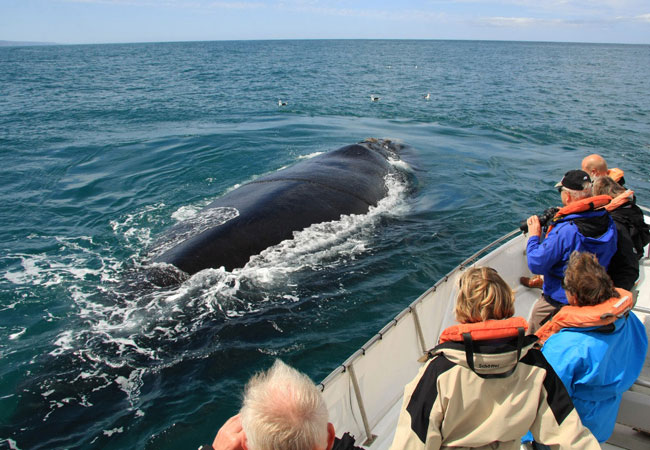
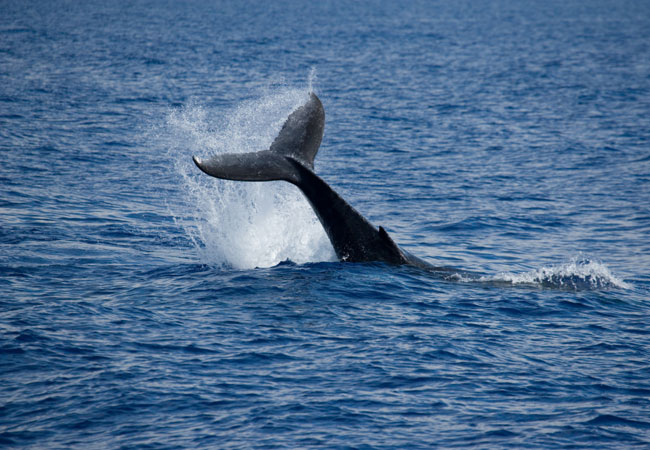
Witsand, in St Sebastian Bay, has earned the reputation of the most important whale nursery on the African Coast and one of the greatest concentrations of Southern Right Whales comes here to calve every year. Boat access in this area, and the breeding grounds of the De Hoop Nature Reserve, is obviously severely restricted. Watching the whales from a boat is another experience entirely. The Southern Right Whale tends towards natural curiosity and venturing close to the boats is not uncommon. Failing this, you're bound to evidence a playful display of raised heads, tails and flippers as the whales acknowledge your presence. Characteristic behaviour is resting head down in the water with tails in the air, called ‘sailing' or ‘headstanding'.
South Africa doesn't allow boats any closer than 300 metres from a whale without a permit and 50 metres with a permit - although this doesn't stop the whales from coming close to the boats themselves, which they often do! Approaching whales is done quietly, without motors and at ‘no wake speed'. We are also the only country in the world, so far, with an established environmental court (in Hermanus) where poachers of protected marine species are tried for their offences. The number of legal boat-based permits is limited. South Africa's coast is divided into sections, for whale watching, and each section has only one permit holder for boat cruises. Boats are also not allowed anywhere near cow-calf pairs. If this does happen accidentally, guides know to leave the area straight away at a constant slow ‘no wake speed' so that as little intrusion as possible occurs.
Southern Right Whales tend to leave our waters by late October, although some stay through November, and sightings are still made even as late as December. Just as they leave our waters, the Humpback whales and their calves arrive and stay until the end of December or early January. But the Humpback does not mate in our waters and are thus less easy to see.
The Overberg coastline is without doubt one of the most exciting parts of the country to view whales and few visitors leave disappointed or untouched by the experience.
"Whales are different. They live in families, they play in the moonlight, they talk to one another and they care for one another in distress. They are awesome and mysterious. In their cold, wet, and forbidding world they are complete and successful. They deserve to be saved, not as potential meatballs but as a source of encouragement to mankind." - Victor B. Scheffer (former chairman of US Marine Mammal Commission).
Find accommodation on the Cape Whale Coast
South Africa Accommodation / Western Cape Accommodation / Cape Town Accommodation / Cape Whale Coast Accommodation
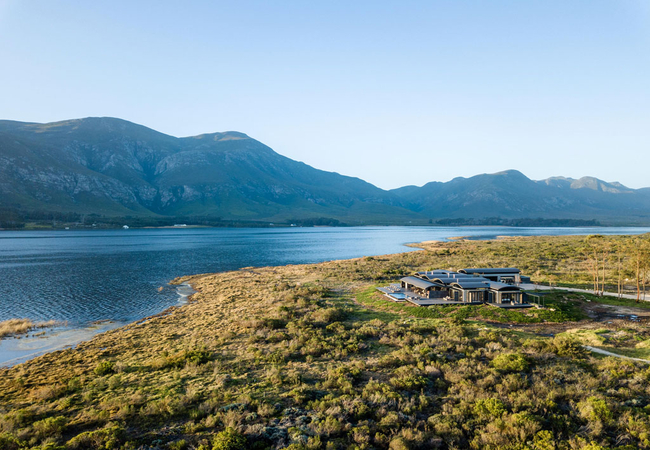
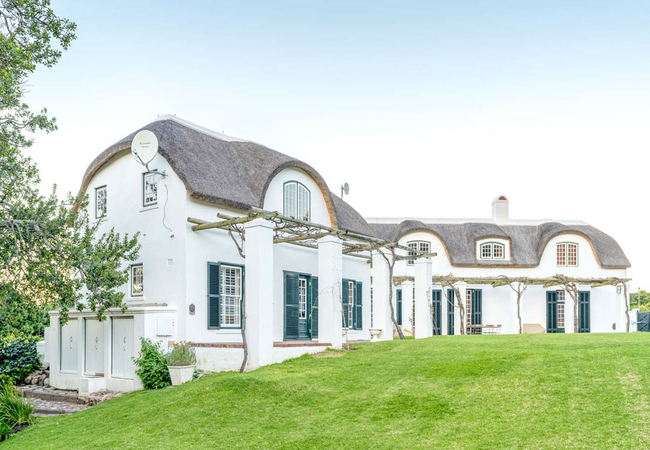
Perivoli Lagoon House
Perivoli Lagoon House is set in a stunning, isolated, 140ha wilderness of colourful Fynbos biome, a stone's throw from the Klein River lagoon wit...
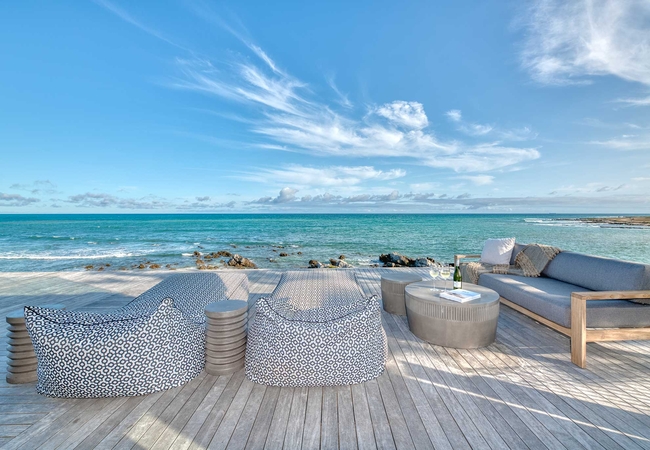
Marlin Manor
Staying at Marlin Manor will afford you a very unique experience at the southernmost tip of Africa, where the two oceans meet. Situated on 650m o...
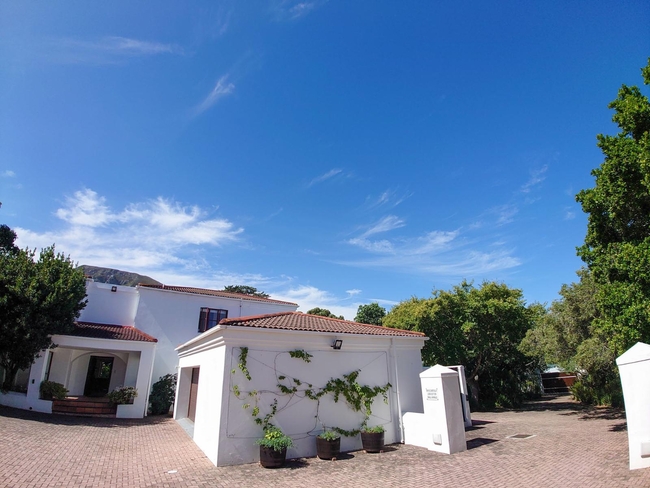
Fynbos House
Just 500 meters from both the beach and cliff paths, and in close proximity to Fernkloof Nature Reserve, Fynbos House offers convenient access to...
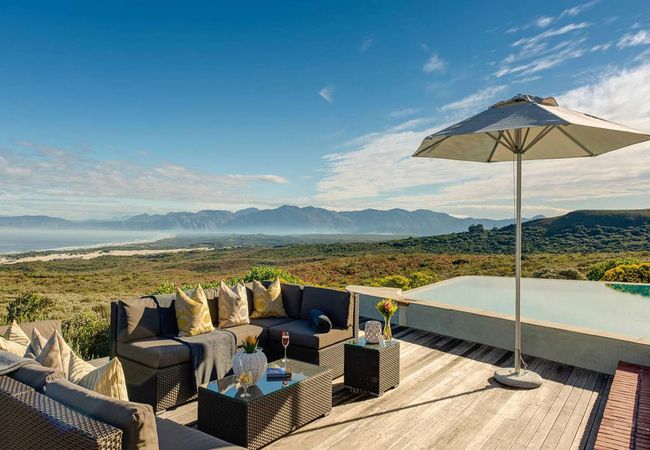
Grootbos Private Nature Reserve
Grootbos is a 5 star private nature reserve that celebrates the wonders of the dramatic landscape of South Africa. Exclusive and secluded, guests...
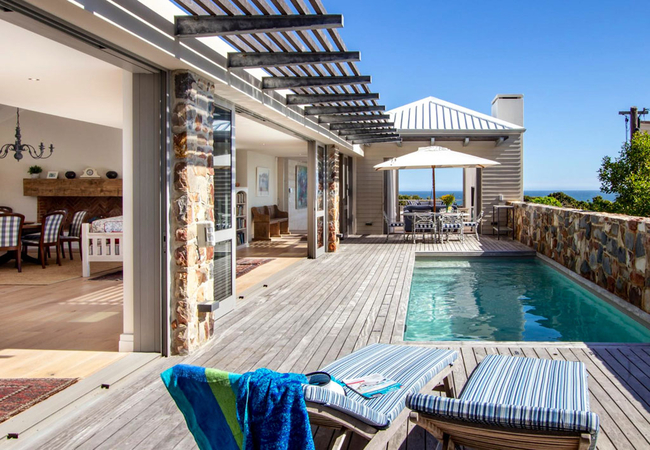
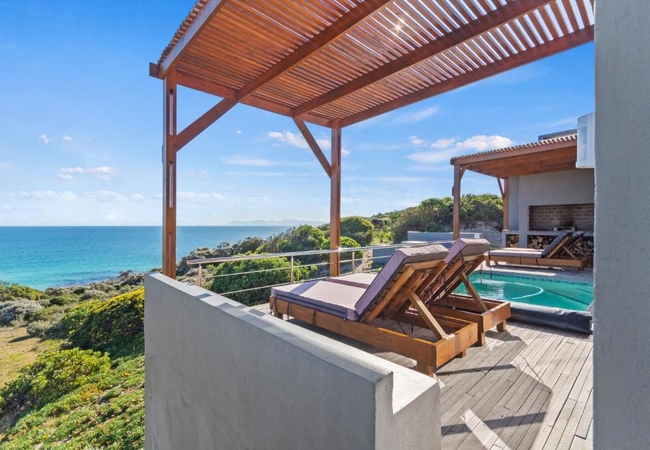
Romansbaai Moksha on the Sea
Romansbaai Moksha is located in the Romansbaai Beach and Fynbos Estate in Gansbaai. Experience bliss and inspiration, lose yourself in a breathta...
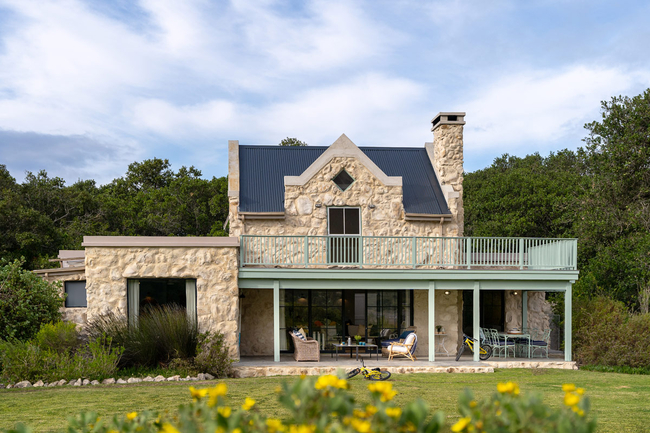
Lawns at Coot Club
Lawns Cottage offers Stanford accommodation set along one-and-a-half kilometres of unspoilt shoreline and 1000 acres of indigenous fynbos and str...
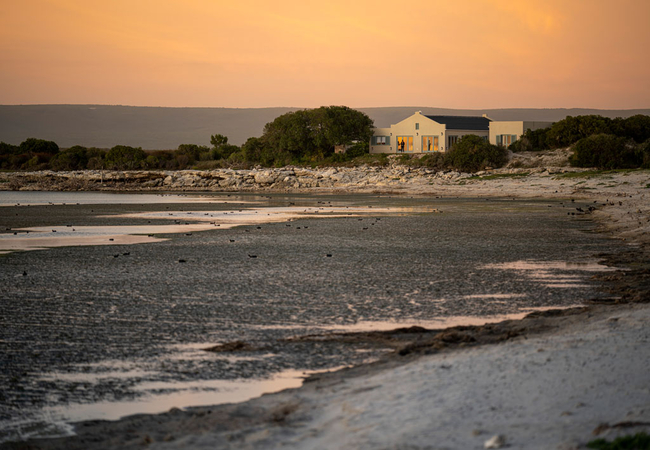
De Mond Villa
De Mond Villa is a holiday home in De Hoop located on the edge of Ramsar Vlei. It has five en-suite bedrooms. There is a fully equipped kitchen, ...
Destinations in the Cape Whale Coast Region
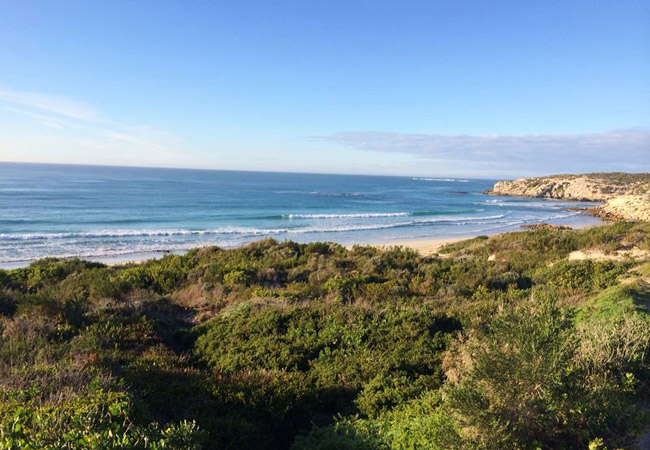
Arniston
Overnight? Arniston accommodation
Lying on the shores of Marcus Bay, just north-east of Cape Agulhas, is the tranquil little fishing village of Arniston, also known as Waenhuiskrans - ‘wagon shelter cliff' - after a large low-tide sea cave, eroded in such a way as to resemble the structur...
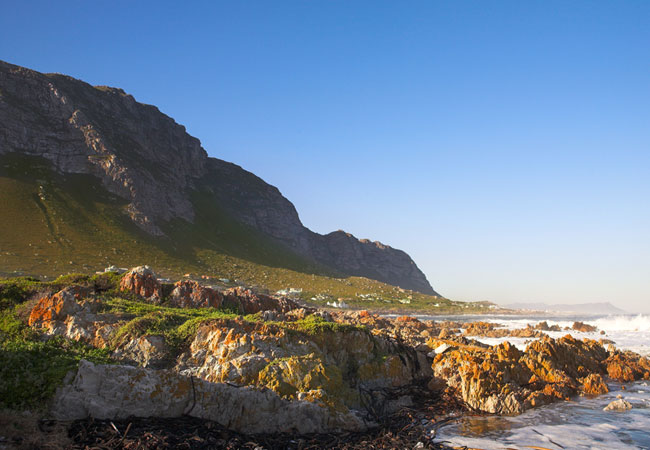
Bettys Bay
Overnight? Bettys Bay accommodation
This sleepy little seaside village offers visitors to South Africa gorgeous overnight accommodation in Bettys Bay on the beach, with breath-taking views and a laid-back vibe. Although less developed than her neighbour, Hermanus, the Harold Porter Botanica...
Brenton On Sea
Overnight? Brenton On Sea accommodation
Lying on the other side of Knysna's Western Head, nestled on the shores of the Indian Ocean in a quiet, lazy bay, residents describe Brenton on Sea's beauty as the coast that Knysna doesn't have, and in reality, Knysna lies on a lagoon, the rough seas mak...
Dana Bay
Overnight? Dana Bay accommodation
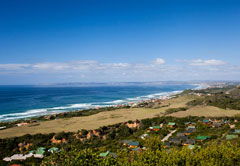
Whilst often disregarded simply as a suburb of Mossel Bay, Dana Bay is in fact a conservancy, set in the heart of the Cape Floral Kingdom, home to fine examples of coastal and limestone varieties of fynbos under threat from global warming.
Limestone f...
De Hoop
Overnight? De Hoop accommodation
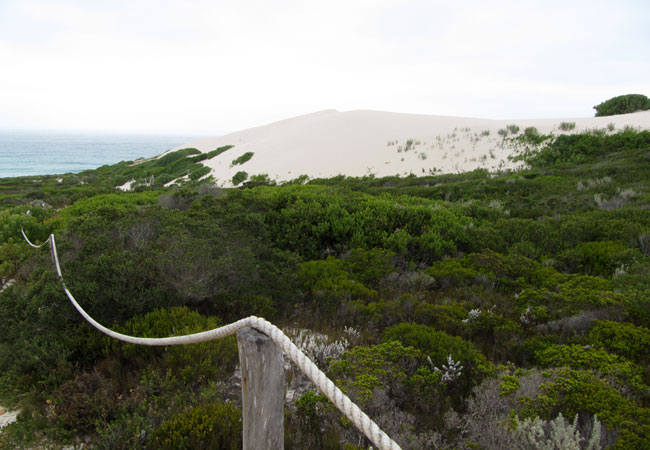
The De Hoop Nature Reserve and adjacent marine reserve lie on the southern Cape coast between the towns of Arniston and Witsand, just 50 km east of Bredasdorp.
This is one of the most biologically diverse sanctuaries in the world and rates as one of th...
De Kelders
Overnight? De Kelders accommodation
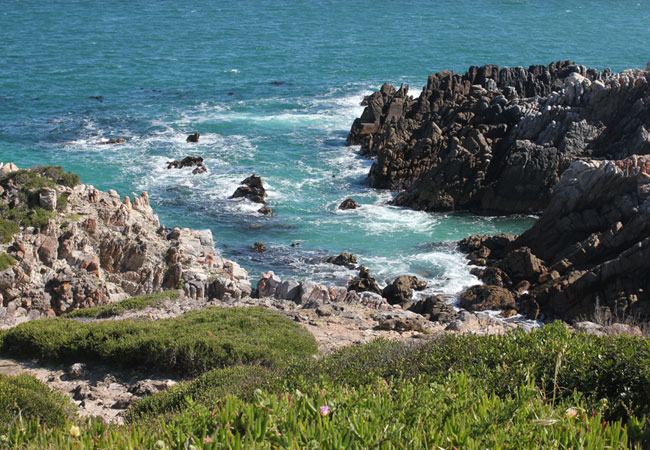
The little village of De Kelders, which lies just 5 km north of Gansbaai and about 25 minutes' drive from Hermanus, has managed to remain largely immune to the large scale tourism that envelopes this part of the country, and is still essentially a fishing...
Fisherhaven
Overnight? Fisherhaven accommodation
As one of the top whale-watching destinations in the world and a scenic seaside town, Hermanus certainly promises much in the way of a fun, exciting destination with plenty to see. It is quiet for most of the year. But, when the whales visit (between Jun...
Gansbaai
Overnight? Gansbaai accommodation
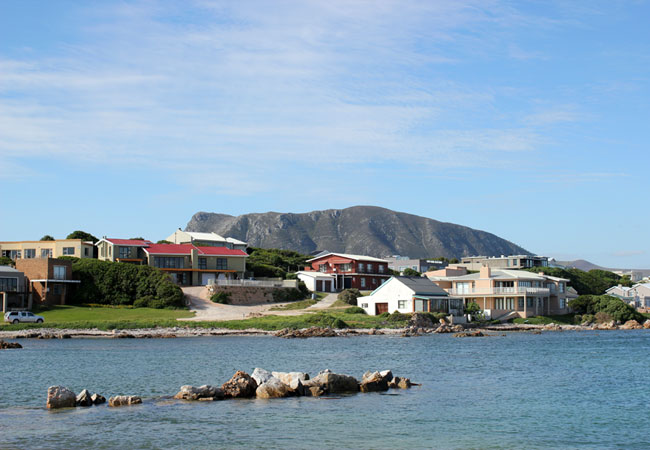
The unpretentious village of Gansbaai - named after a flock of wild Egyptian geese that are alleged to have congregated at the freshwater fountain next to the harbour - has a large reputation.
Both Southern Right Whales and Great White Sharks frequent...
Glentana
Overnight? Glentana accommodation
Just east of the Great Brak River, almost half way between Mossel Bay and George, lies the beautiful seaside village of Glentana, its beaches topped by fynbos covered cliffs that plunge precipitously into the Indian Ocean.
The origins of the name, Gle...
Gordons Bay
Overnight? Gordons Bay accommodation
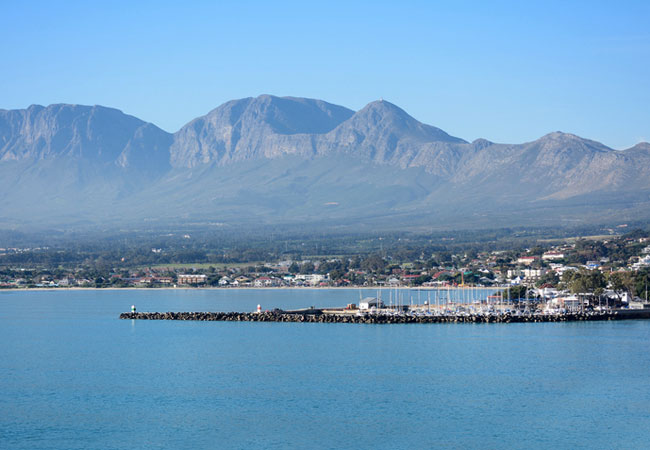
Gordon's Bay offers beautiful accommodation near Cape Town, where the ocean and mountains of South Africa are showcased to perfection. Gordons Bay is all about its waterfront, where the bay lies against the sheer mountains of the Helderberg, providing sh...
Hawston
Overnight? Hawston accommodation
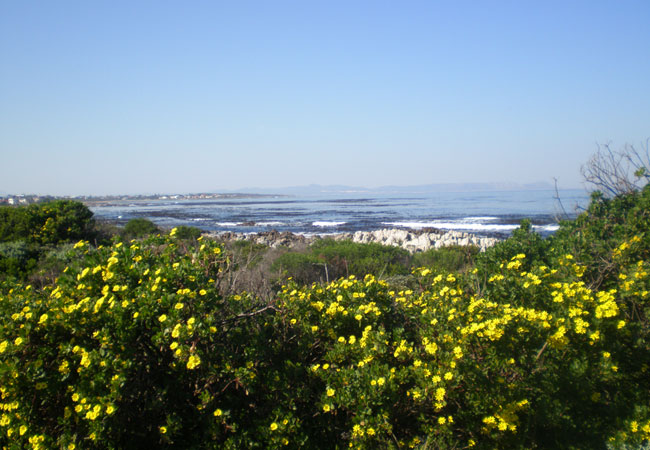
Just past Hermanus, between Fisherhaven and Onrus, lies the village of Hawston, which is notably famous for its beautiful beach, more than the attraction Hawston might hold for visitors.
The beach, tucked away in the little town, is truly beautiful. Sw...
Hermanus
Overnight? Hermanus accommodation
Thanks to the many beautiful options for accommodation in Hermanus, this is a stunning destination that is one of the best whale-watching spots for anyone visiting South Africa. It is a thriving holiday resort offering residents and holiday-makers modern ...
Kleinbaai
Overnight? Kleinbaai accommodation
The appealing little village of Kleinbaai has suffered the unmerited disadvantage of being the smaller of two towns that lie at Danger Point Peninsula, where shark diving and whale watching are world-renowned draw cards.
As a result Kleinbaai, which i...
Kleinmond
Overnight? Kleinmond accommodation
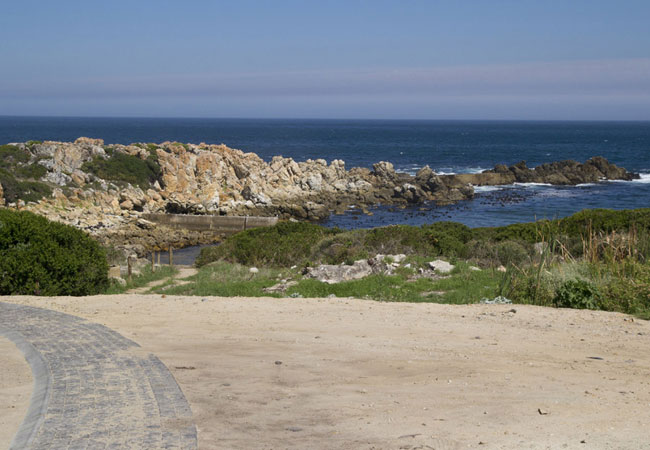
Kleinmond lies on a lagoon at the small mouth - hence the name - of the Botriver on a narrow strip of land hugged on the one side by the Palmiet Mountain range and on the other by the Atlantic Ocean.
Kleinmond is within easy driving distance from Cape...
L'Agulhas
Overnight? L'Agulhas accommodation
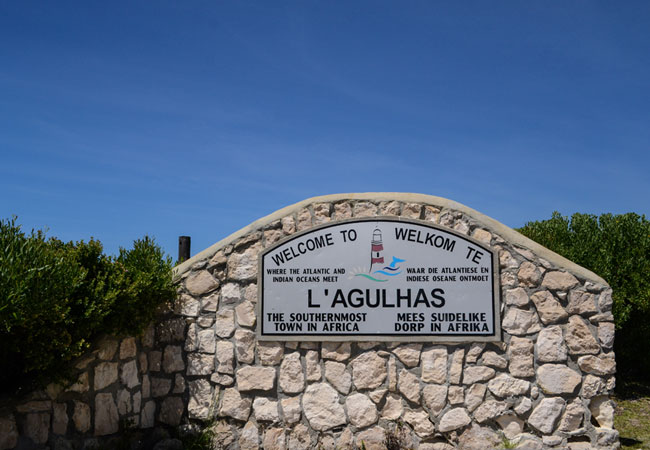
L'Agulhas or Agulas - The biggest draw card for Agulhas, other than the fact that it lies only two hours from Cape Town on one of the most beautiful coasts in the country, is that this little village lies on Cape Agulhas, the end of the African continent ...
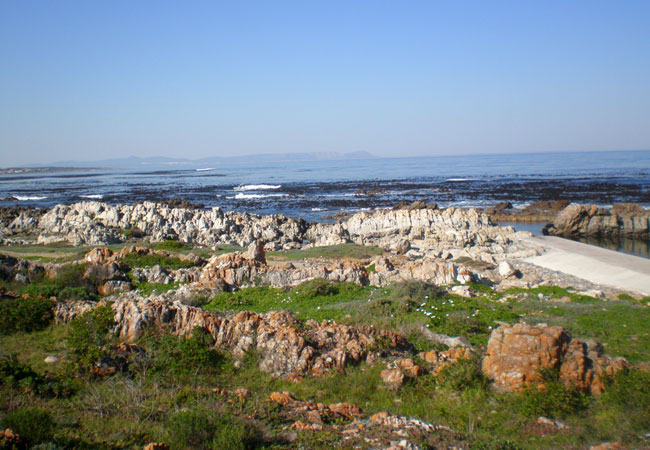
Onrus
Overnight? Onrus accommodation
The Cape Overberg region in the province of the Western Cape comprises some of the most scenic and popular parts of South Africa. These include the shark cage diving Mecca of Gansbaai as well as the whale watching hub of Hermanus. Onrus is part of Hermanu...
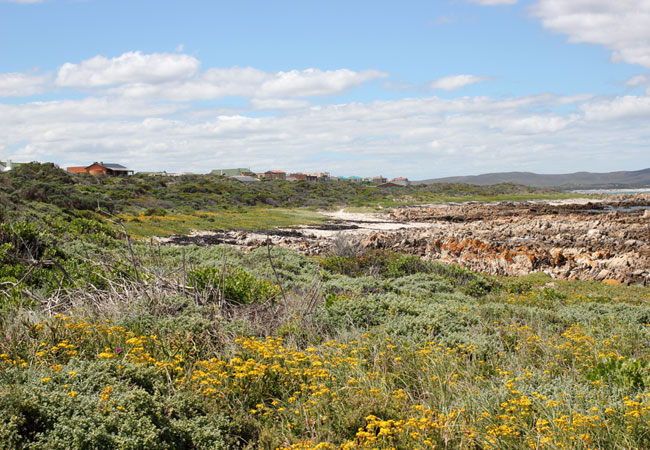
Pearly Beach
Overnight? Pearly Beach accommodation
Not even 20 km from Gansbaai, Pearly Beach has been described as the longest undisturbed sand beach in the Western Cape, and even if this is a little grandiose a description, the beach nevertheless seems endless.
Pearly Beach is known for its wild bea...
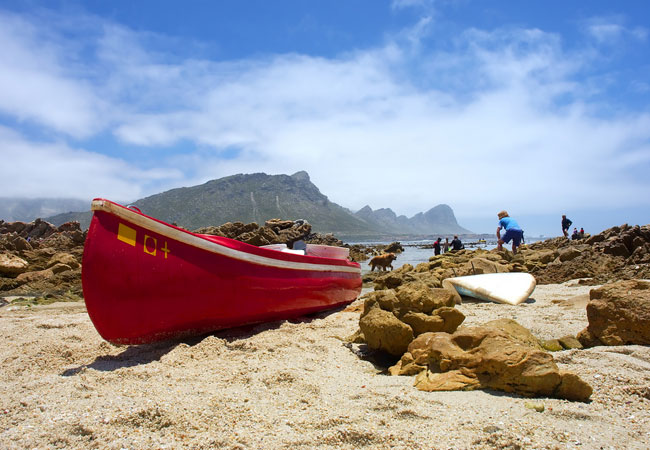
Pringle Bay
Overnight? Pringle Bay accommodation
The little seaside village of Pringle Bay is one of the towns set within the natural beauty of the Kogelberg Biosphere, the only reserve in South Africa to be proclaimed by UNESCO, which supports over 1600 species of fynbos, 150 of which are endemic.
T...
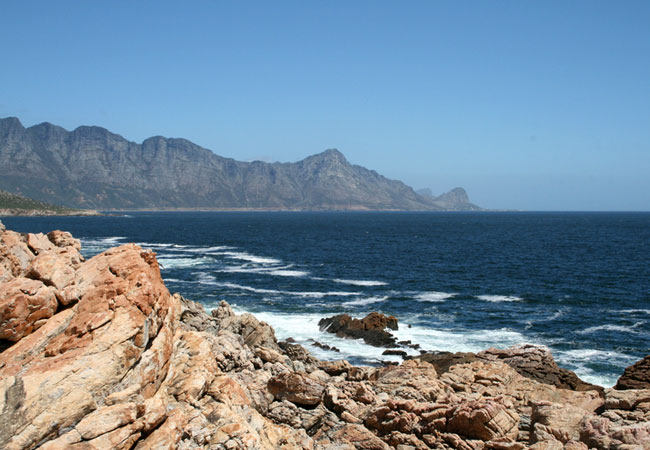
Rooi Els
Overnight? Rooi Els accommodation
Rooi Els perches like a child's puzzle piece on the edge of Route 44, the first little seaside village after leaving Gordon's Bay, before the landmark Hangklip rock face.
Rooi Els (sometimes spelt Rooiels or Rooi-Els), like its neighbours Pringle Bay,...
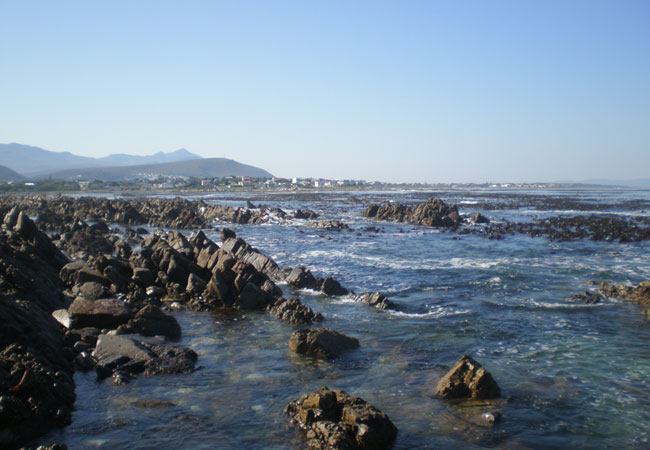
Sandbaai
Overnight? Sandbaai accommodation
Sandbaai is one of the newer suburbs in the Greater Hermanus area.
It lies literally in a little sandy bay, hence its name, just past the L'Agulhas lighthouse. The village is only a stone's throw away from Hermanus and to the east of Onrus, little ove...
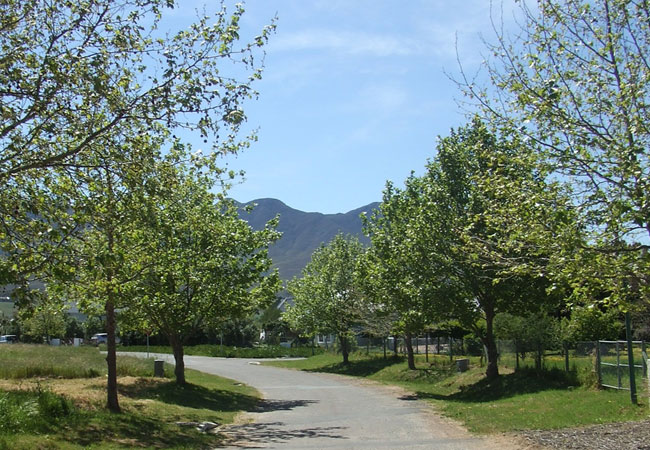
Stanford
Overnight? Stanford accommodation
Some of the lovely bed and breakfasts and fine hotels offering accommodation in Stanford showcase the natural beauty of the Cape Overberg, and are wonderful bases for visitors that want to explore South Africa. The unique little village of Stanford, overl...
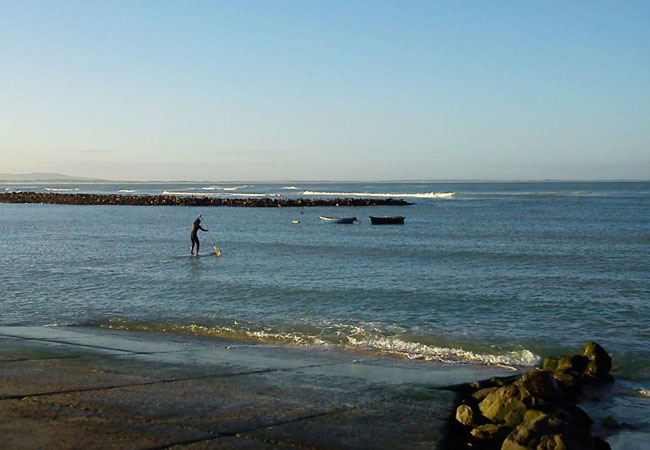
Struisbaai
Overnight? Struisbaai accommodation
Start your South African holiday in the little town of Struisbaai, which is home to many popular fishing spots, and plenty of catered and self-catering Struisbaai accommodation on the beach. When asked to describe Struisbaai, many refer to the pretty litt...
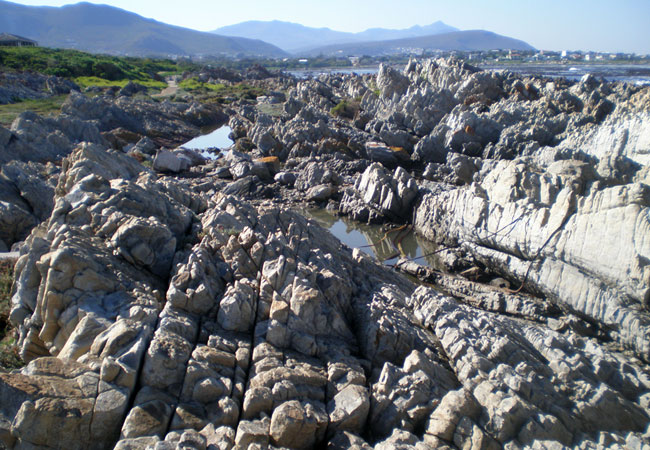
Vermont
Overnight? Vermont accommodation
The little village of Vermont is usually spoken of in the same breath as its immediate neighbour, Onrus, and indeed, the two lie close together on the coast where the Onrus River runs into the sea via a lagoon, just over an hour's drive from Cape Town in ...
Witsand
Overnight? Witsand accommodation
The peaceful, coastal town of Witsand (white sands) lies on St Sebastian's Bay just off the N2 on the Cape South Coast, three hours from Cape Town and not to be confused with the Witsand Nature Reserve, which lies just west of the Langberg Mountains in th...