Connochaetes gnou - The Wildebeest
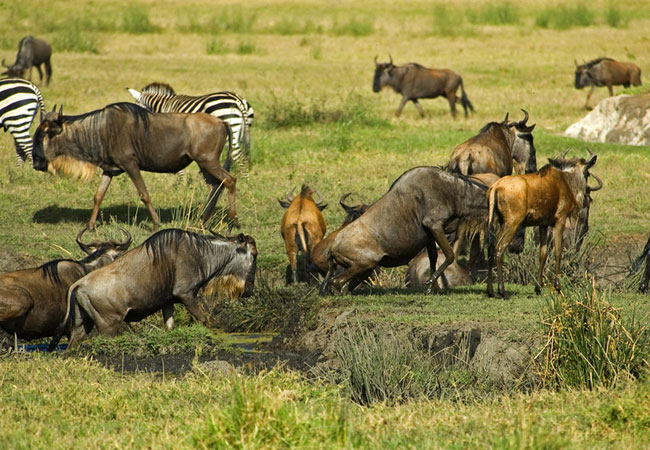
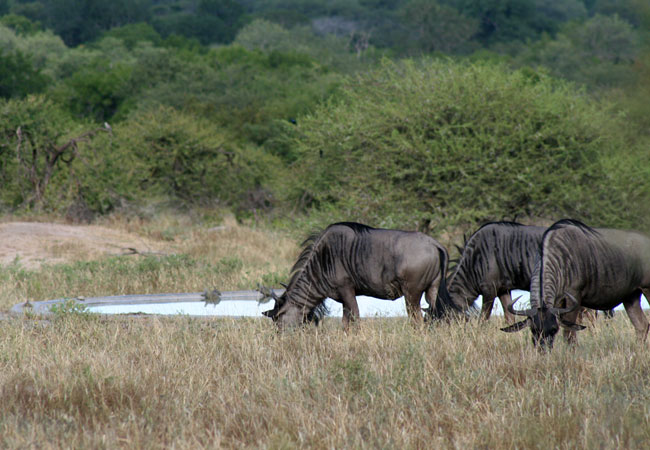
The wildebeest roams the open grasslands of South Africa in large herds of up to 50. It always remains close to water supplies, grazing in the morning and late afternoon, and resting in the hot sun in between.
Did you know? The wildebeest is also called a gnu. It is a member of the antelope family.
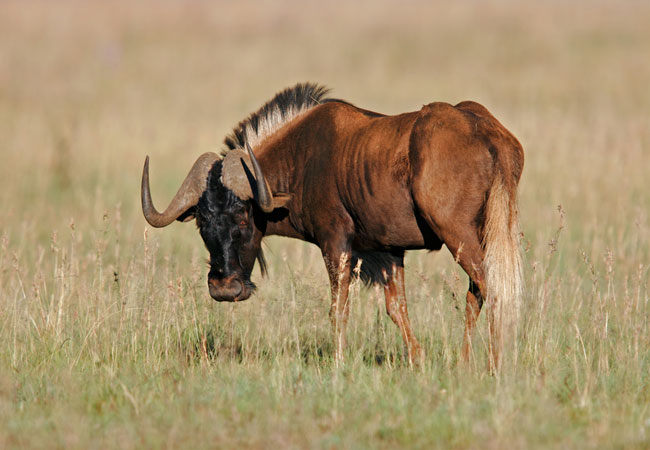
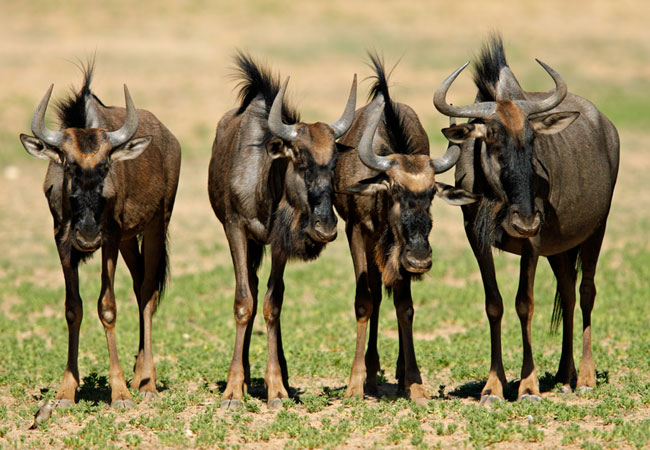
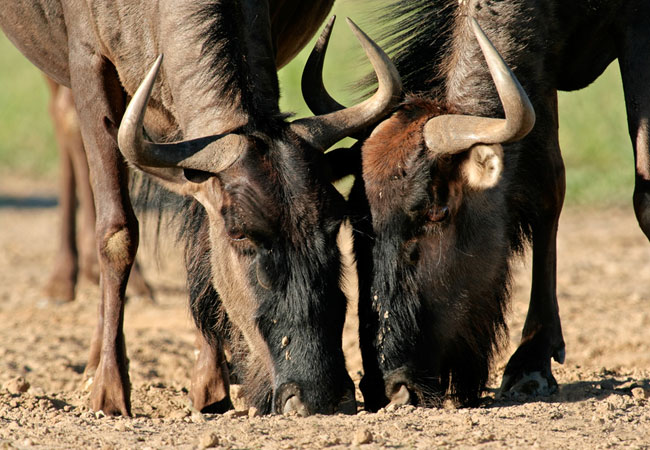
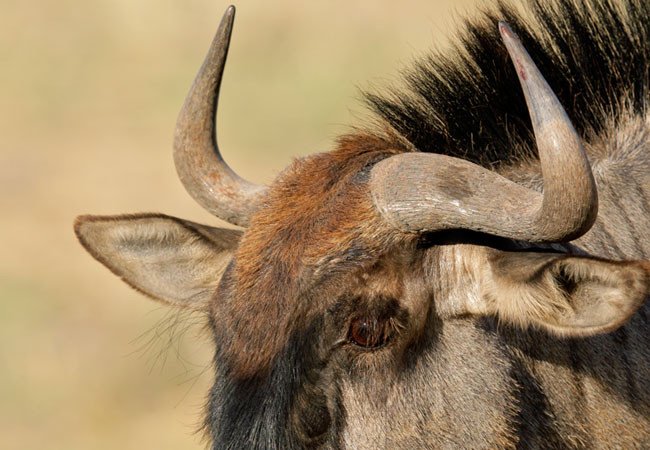
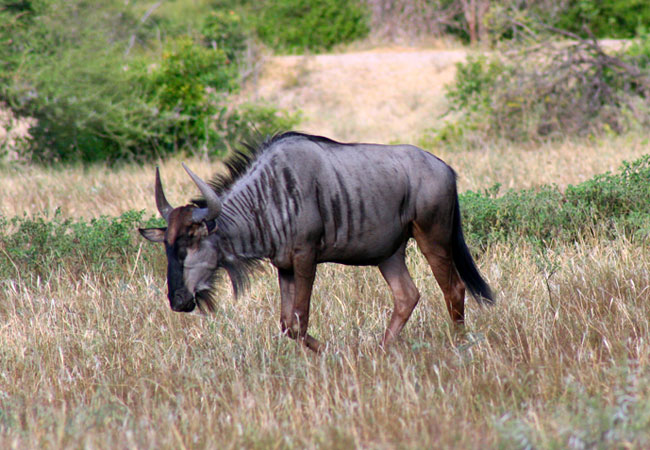
The head of the wildebeest is large and box-like. Both males and females have curving horns, that are close together at the base, but curve outward, inward and slightly backward. The body looks disproportionate, as the front end is heavily built, the hindquarters slender and the legs spindly. The wildebeest is gray with darker vertical stripes that look almost black from a distance.
Size
Stands 50 to 58 inches at the shoulder.
Weight
Between 300 and 400 pounds.
Habitat
Wildebeest are found in open woodlands and on grassy plains.
Distribution
In South Africa, distribution is concentrated to the north-eastern regions of the country. Although Wildebeest are not regarded as endangered, they are mostly found only in conservation areas.
The Kruger National Park near Phalaborwa is a prime place to spot the impressive proportions of the wildebeest. Other reserves that boast them include the Mapungubwe National Park (5.5 hours from Johannesburg and Rustenburg), the Mountain Zebra National Park just outside Cradock in the Eastern Cape, and the Pongola Nature Reserve, which is about 15 hours from Hluhluwe.
Diet - Herbivore
Strictly grazers, wildebeest prefer short grass. They are unable to go without water for more than a few days.
Socialisation
Wildebeest are continually on the move as they look for supplies of grass and water. Active both day and night, they have a tendency to string out in long single columns when on the move. They cover long distances at a slow rocking gallop but can run fast when necessary.
Did you know? Black Wildebeest are endemic to South Africa
During mating season smaller breeding groups of about 150 animals form within the massive herds. In these small groups, five or six of the most active bulls establish and defend territories that females wander through. The bulls perform antics, galloping and bucking around their territories. They paw the ground and rub their heads on it, spreading secretions. They also urinate and daefecate in a certain spot and toll in it to signal to other bulls to stay away.
Reproduction
Females give birth to one calf at a time.
Gestation
Gestation period is 8.5 months.
Life expectancy
20 years in the wild (according to the AWF, they can life up to 40 years).
Predators
- African Wild Dogs
- Hyenas
- Cheetahs
- Lions
Additional Reading
You might also be interested inWhere to see Wildebeest in their natural habitat?
Want to see wildebeest in their natural habitat? In South Africa, find wildebeest in these and many other game, nature reserves and national parks...