Suricata suricatta - The Meerkat
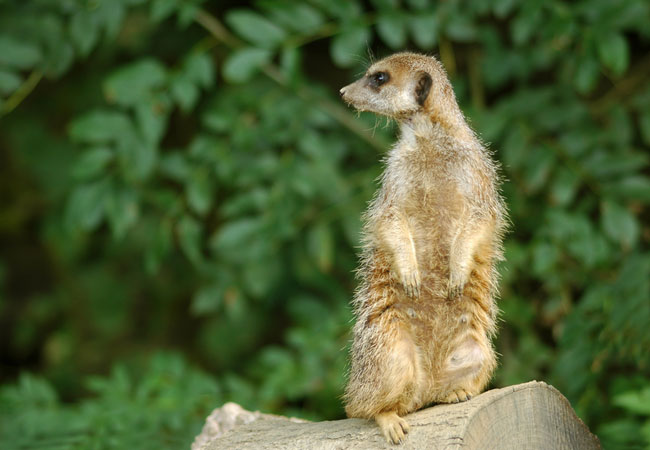
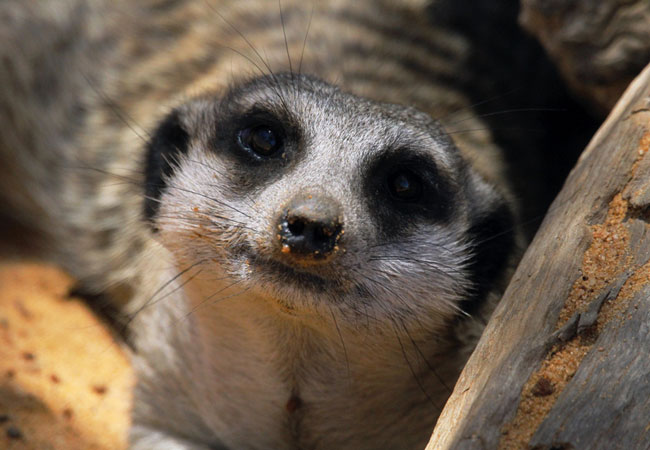
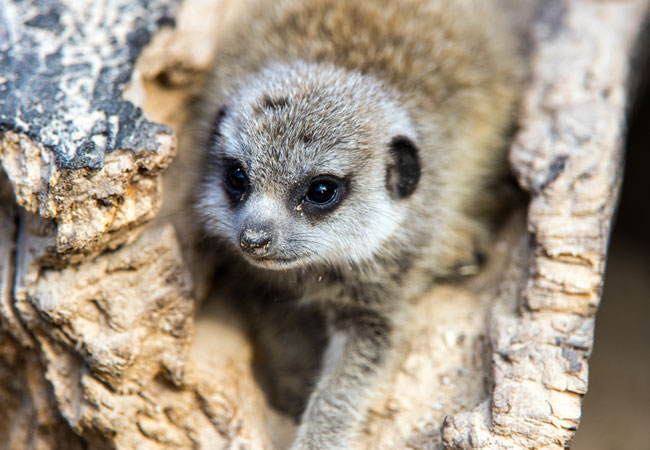
Suricates have a tan to grey coat with brown bands on the back and sides, the head and the throat are greyish white.
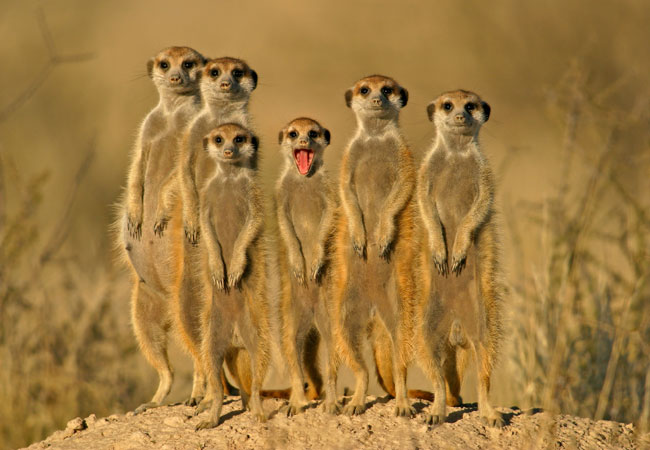
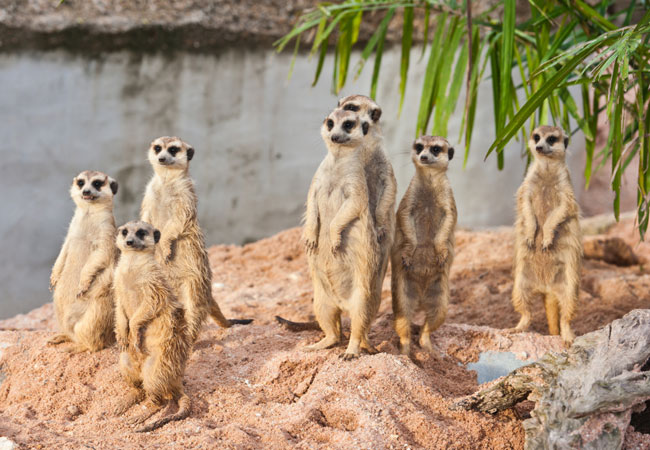
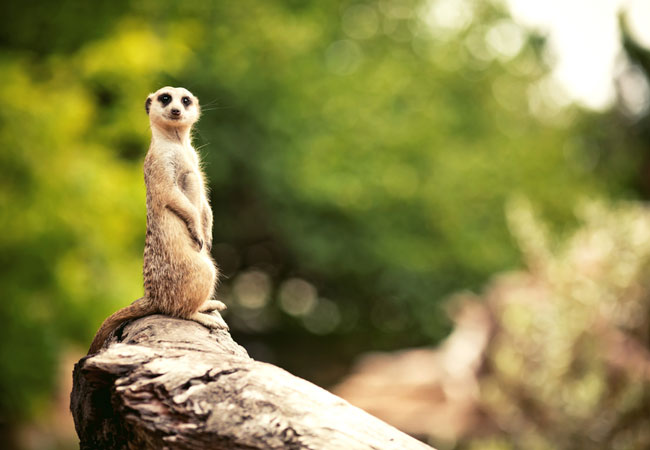
Did you know? Adult Meerkat take it in turns to stand on sentry, finding a convenient vantage point where they can watch for predators, such as eagles.
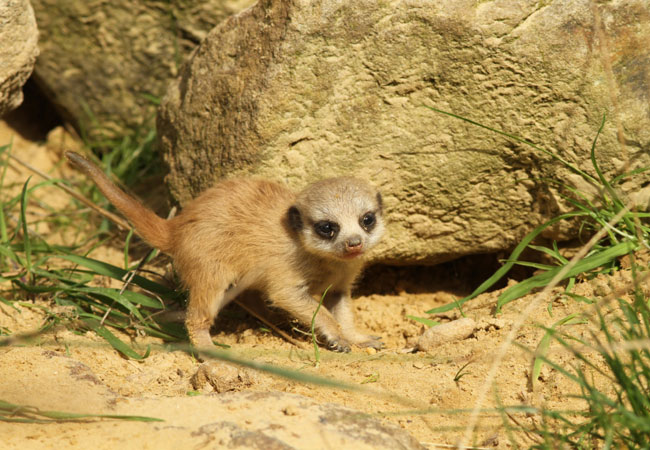
Their eyes are ringed with black and they have black rounded ears and a black tip to the tail. Like all mongooses, they have long slender bodes and short limbs.
Size
Length: 25-35cm, Tail: 17-25cm
Weight
600-975g
Habitat
Savannah. Distribution: Southern Africa (Angola, Namibia, South Africa and Botswana).
Distribution
Meerkats are cute and entertaining, so look out for them when visiting some of the South African game parks. They can be found in the Kgalagadi Transfrontier Park and the Tswalu Kalahari Reserve (Northern Cape), and the Addo Elephant National Park (an hour outside Port Elizabeth in the Eastern Cape).
Diet - Omnivore
Insects, spiders and other small animals, roots and bulbs.
Socialisation
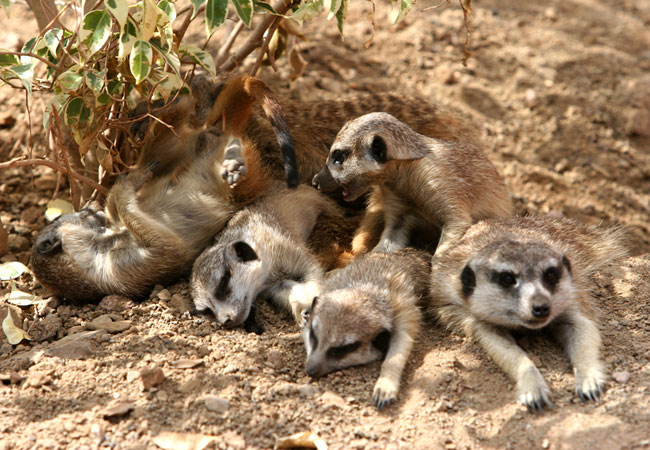
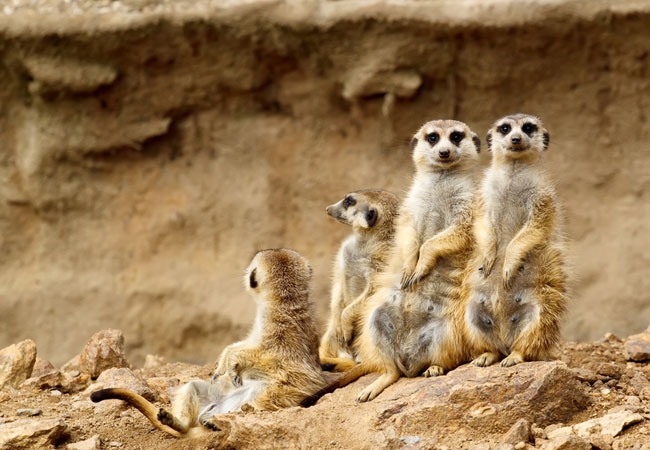
Suricate (Meerkats) are diurnal. They live in colonies of up to 30. The groups consist of 2-3 family units comprising a male, a female and their 2-5 young. They usually inhabit the burrows of ground squirrels, which they enlarge by digging with their sharp claws. When emerging from their burrows in the early morning, they tend to sunbathe before spending the day foraging for small prey.
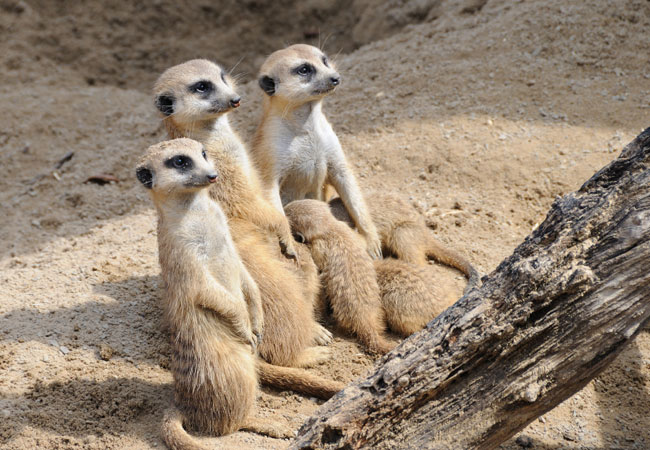
Adults take it in turns to stand on sentry, finding a convenient vantage point where they can watch for predators, such as eagles. If danger is sighted, the sentry gives a warning bark, and the meerkats flee to the safety of their burrows. If the threat is a snake, the adults will huddle together and drive the predator away. While sentries keep watch, other meerkats take care of the young.
Reproduction
The females give birth to 2-5 young in a nursery chamber of the burrow.
Gestation
Gestation is 11 weeks.
Life Expectancy
12 to 14 years in captivity.
Predators
- Jackals
- Eagles
- Badgers
- Wild cats
- Many others
Walk with Meerkats
To witness these delightful animals first hand, accompany Grant McIlrath on his walks with Meerkats and let him introduce you to these personalities on the plains of the African outback as pink sunlight lifts or falls over their small silhouettes.
Meerkat 'whisperer' Grant is a research biologist who has habituated a small group of wild Meerkat for the benefit of conservation and science. See Walk with Meerkats for additional information and contact details.
Wish you were here?

Additional Reading
You might also be interested inWhere to see Meerkat in their natural habitat?
- DeZeekoe Guest Farm offers daily sunrise meerkat tours near Oudtshoorn.
- Cullinan Guest Farm, McCarthy's Rest
- Tswalu Kalahari Reserve, Tswalu
- Springbokpan Guest Farm, McCarthy's Rest
- There are a number of game reserves in the Kalahari – Tswalu is South Africa's biggest private game reserve, whilst the Kgalagadi Transfrontier Park straddles South Africa and Botswana.