Antidorcas marsupialis - The Springbok
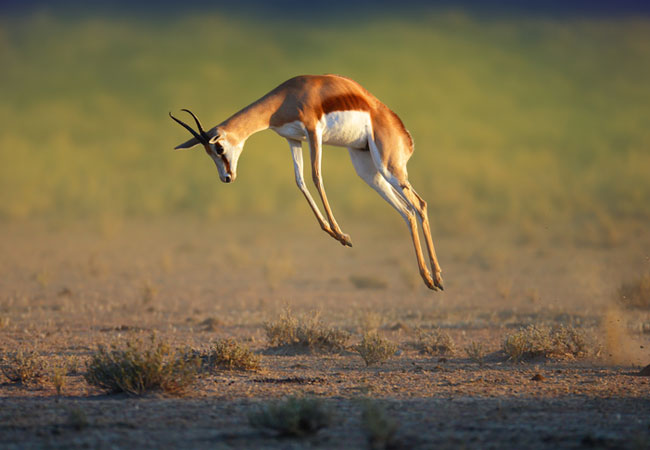
The Springbok prefers the more arid savannahs of the country, moving around at high speeds. Typical of this species is the jumping display which lead to its common name.
Did you know? The national rugby team of South Africa is known as 'The Springboks'.
Springbok are fast sprinters. They reach speeds of 80 km per hour and jump more than 10 metres. Interesting jumping behaviour can be observed during and after the rare rainfalls.
Did you know? The Springbok is the national animal of South Africa.
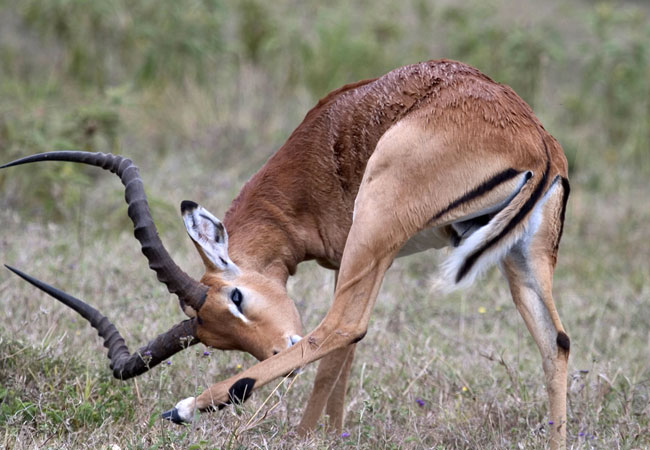
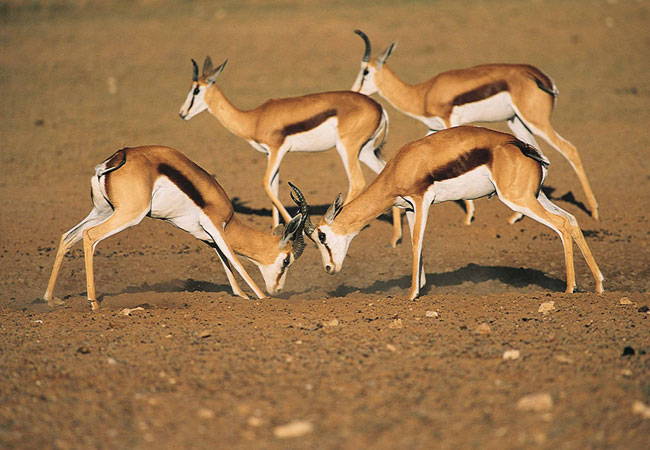
It is believed that for the joy of living, the animals jump up and down like bouncing balls, stretching their front and rear legs simultaneously and bending their heads down (called 'pronking'). In fear of attack, each springbok lets out a high pitched alarm. Both sexes have horns but those of the ram are thicker and rougher.
Size
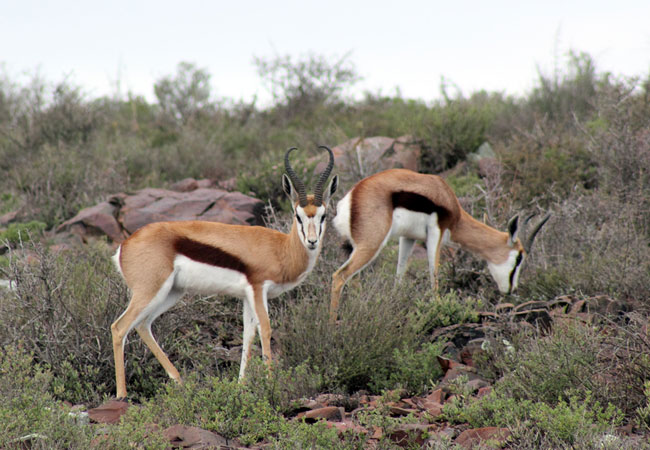
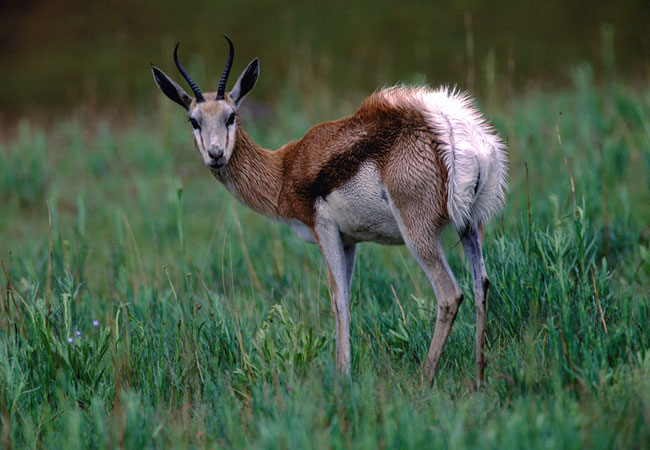
Springbok / Springbuck stand 75 cm high and weighs about 40 kg.
Habitat
Savannah; This species has adapted to the dry, barren areas and open grass plains and is thus found especially in the Free State, North West Province and in the Karoo up to the west coast.
Distribution
The elegant springbok can be found in national parks and game reserves all around South Africa. Interestingly, this excludes the Kruger National Park. However, they can be seen at the Kgalagadi Transfrontier Park in the Northern Cape, the Sanbona Wildlife Reserve and Aquila Game Reserve near Cape Town in the Western Cape, the Addo Elephant National Park just outside Port Elizabeth in the Eastern Cape, and the Pilanesberg National Park in the North West Province.
Diet - Herbivores
Grasses, Leaves.
Socialisation
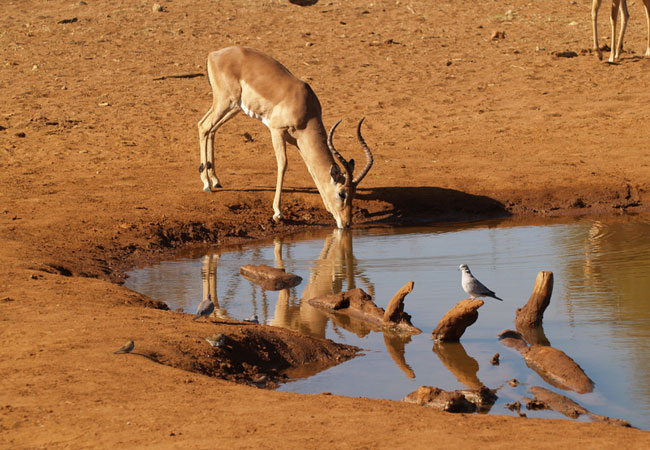
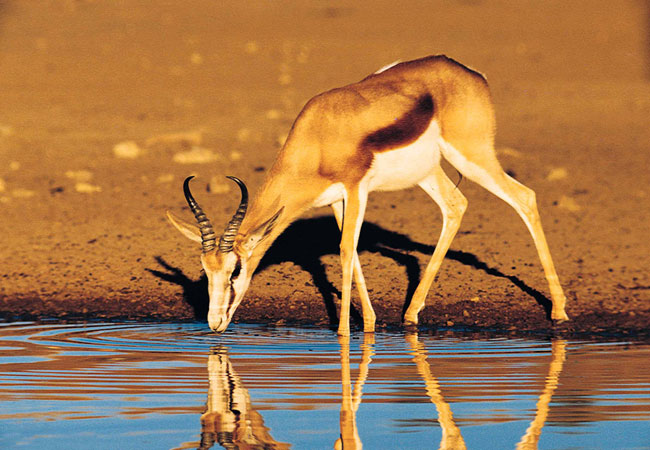
Springbok are herd animals and move in small herds during winter, but often crowd together in bigger herds in summer. They eat both grass and leaves and can go without drinking-water, because they get enough moisture from the succulent leaves. Where drinking-water is available they will use it.
Reproduction
Breeding occurs all year round. Each female gives birth to one fawn.
Life Expectancy
10 years in the wild
Predators
Wish you were here?

Additional Reading
You might also be interested inWhere to see Springbok in their natural habitat?
Want to see springbok in their natural habitat? In South Africa, Springbok are a common feature in most reserves and national parks, including...