Aepyceros melampus - The Impala
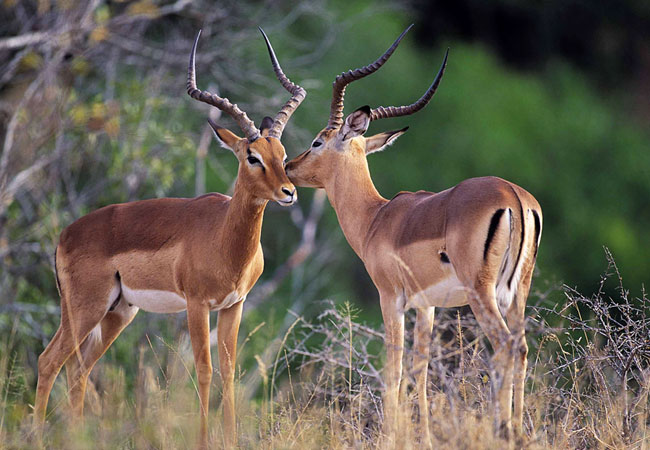
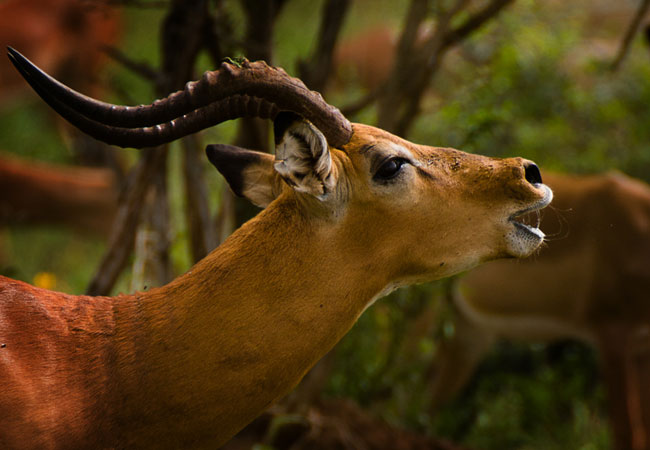
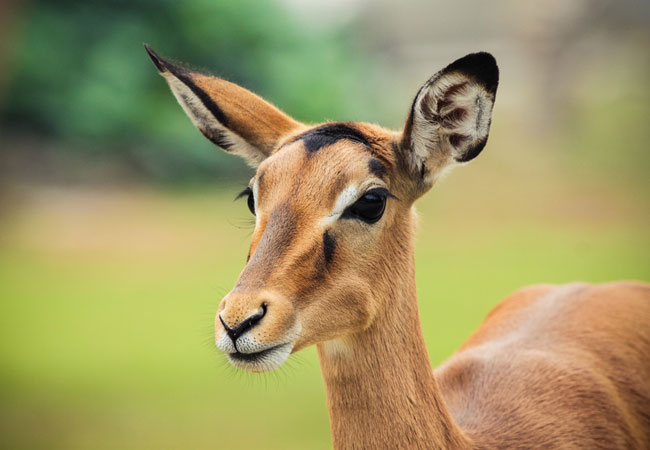
The graceful impala is a slender, medium-sized antelope so adaptable that it is found from southern Africa to the northern limits of East Africa. The body is reddish-brown with white hair inside the ears, over each eye and on the chin, upper throat, underparts and buttocks.
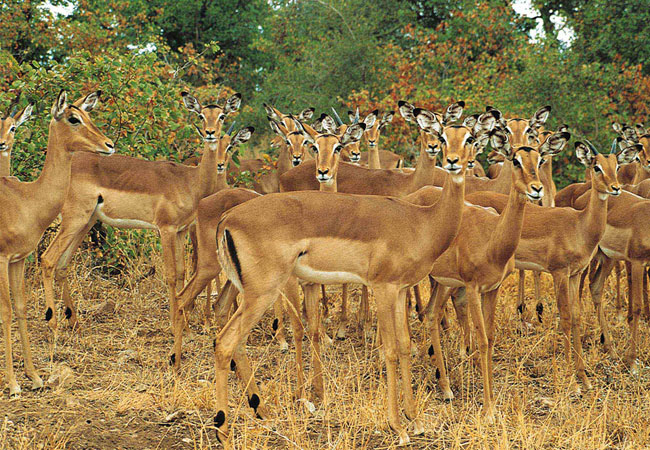
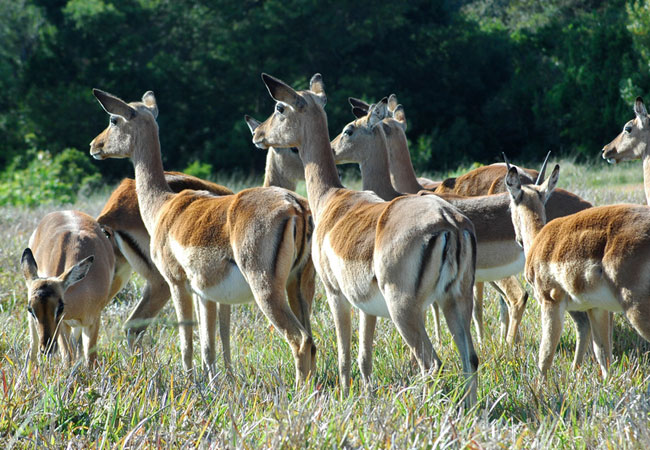
Did you know? Herds offer protection from predators, such as lions. An alert impala will bark out an alarm that puts the entire herd to flight - and a fleeing impala is no easy prey. (Ref: National Geographic)
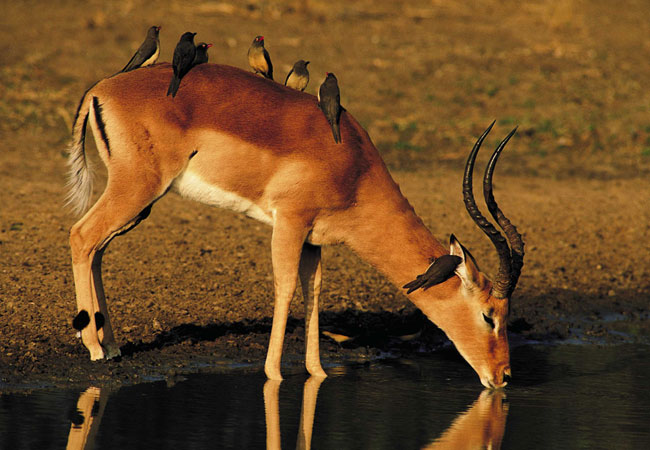
A narrow black line runs along the middle of the lower back to the long tail, and a vertical black stripe appears on the back of each thigh. Unlike other antelopes, impalas have large, brushlike tufts of long, coarse black hair that cover a scent gland located just above the heel on each hind leg.
Size
28 to 36 inches tall.
Weight
100 to 135 pounds.
Habitat
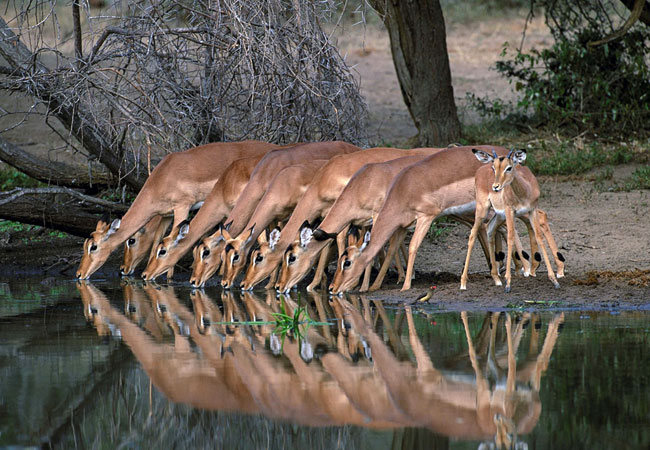
Savanna and light woodland. Impalas are found at grassland and woodland edges, usually very close by water.
Distribution
See the graceful meanderings of the impala at the Kruger National Park in Mpumalanga, the Pongola Nature Reserve (about two hours from Richard's Bay in KwaZulu-Natal), Klipriviersberg Nature Reserve (less than half an hour outside Johannesburg in Gauteng), and Pilanesberg National Park in the vast North West Province.
Diet - Herbivores
Grazers and browsers, Impalas eat tender young grass shoots in the wet season and herbs and shrubs at other times. During the dry season they drink daily.
Socialisation
Their social organisation allows impalas to adapt to prevailing environmental conditions. When food is plentiful, the males become territorial. In home ranges averaging 3 square miles, six to eight dominant males set up territories. They stand with erect posture, rub scent from face glands and make dung heaps to mark their territory.
The females form herds of 10 to 50 or more and wander in and out of male territories. If they start to leave the territory, the male tries to herd them back to the centre, or he feigns danger just beyond his boundary by taking a stance normally used as a warning sign. He tries to mate with females in oestrus and defends his territory from challenging males. Bachelor males are allowed to remain in male territories if they ignore the females.
The territorial male's challenger will have worked his way up through the hierarchy of the bachelor group until he becomes the dominant male. He then leaves the group and challenges a territorial male through horn duels.
Reproduction
After a gestation period of 6 to 7 months, a single fawn is born.
Life Expectancy
12 years in the wild.
Predators
Additional Reading
You might also be interested inWhere to see Impala in their natural habitat?
Want to see impala in their natural habitat? In South Africa, find impala in many game reserves and national parks, including...