Hippopotamus amphibius - The Hippopotamus
The hippopotamus, whose hide alone can weigh half a ton, is the third-largest living land mammal, after elephants and white rhinos. The Hippo was considered a female deity of pregnancy in ancient Egypt, but in modern times has been wiped out of that country because of the damage it inflicts on crops. The hippo continues to thrive in other parts of Africa.
Did you know? The name hippopotamus comes from the Greek "hippos," meaning horse. These animals were once called "river horses" but the hippo is more closely related to the pig than the horse.
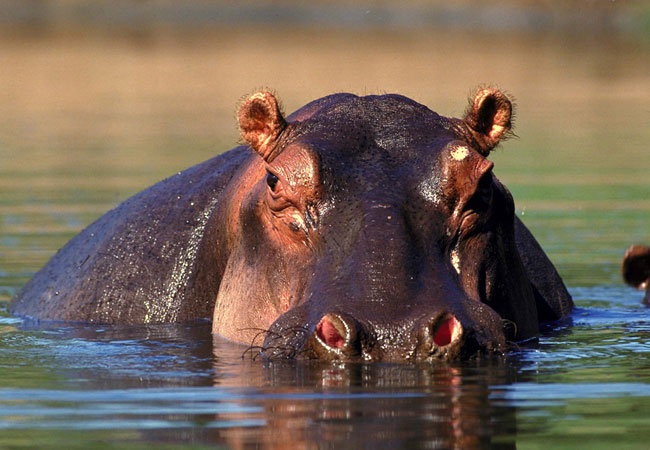
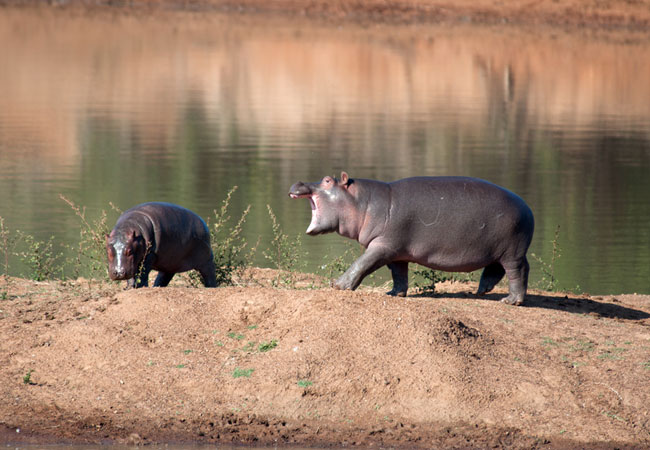
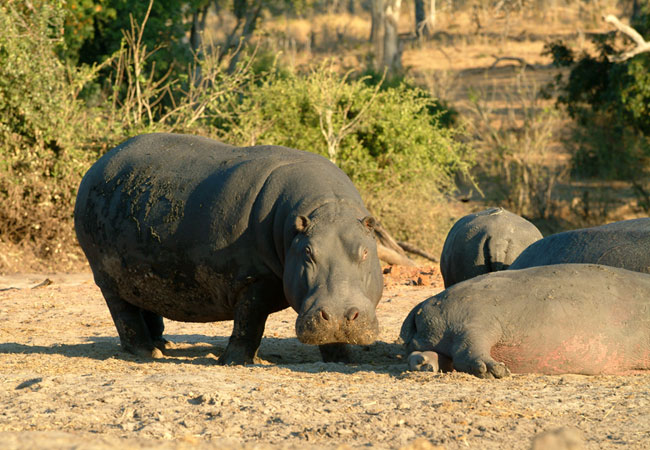
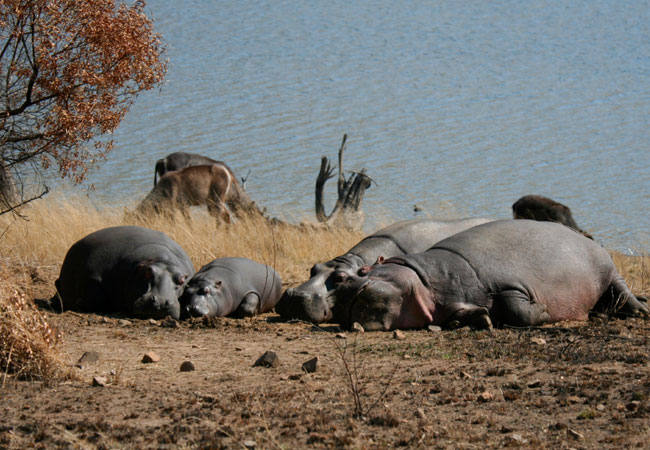
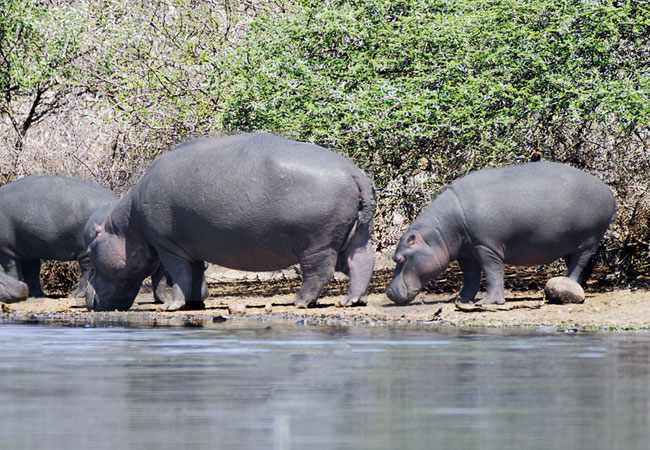
An enormous, amphibious mammal with smooth, naked skin. An inflated looking body supported on short, thin legs. Huge muzzle (bigger in males), eyes, nostrils and little ears placed high on the head. Canines enlarged as tusks. Brown to gray purple with pink underparts and creases, short bristles on head, back and tail. The hippo's proportions reflect its sedentary, amphibious existence. Its plump and bulky body is set on short, stumpy legs, with each foot having four toes. Although webbed, the toes splay enough to distribute the weight evenly over each toe and therefore adequately support the hippo on land.
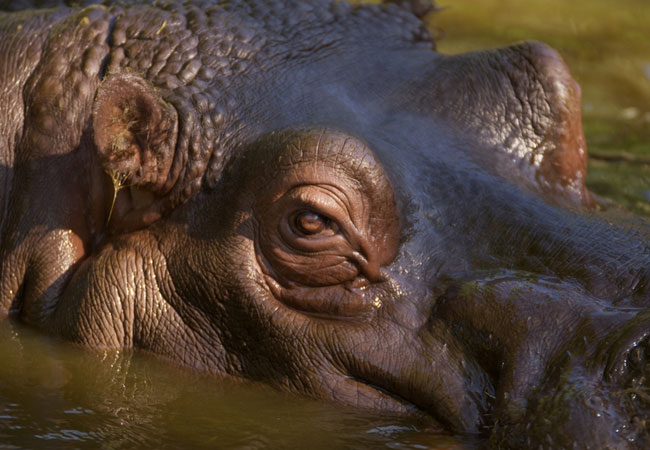
With very thick skin, especially over the back and rump, the grayish-brown body is almost completely hairless, with only a few bristles around the mouth and the tip of the tail. The hippo has neither sweat nor sebaceous glands but does have unique glands that produce a viscous red fluid, leading to the myth that hippos "sweat blood." The hippo relies on water or mud to keep it cool, and the red fluid may have a similar function, but it is often produced in copious amounts when the animal is excited.
Size
13 feet long and up to 5 feet tall.
Weight
1600-3200 kg (males) 655-2344 kg (females).
Habitat
Rivers, swamps and protected areas. Formerly everywhere south of the Sahara where adequate water and grazing occur. Largely confined now to protected areas but still survives in many major rivers and swamps.
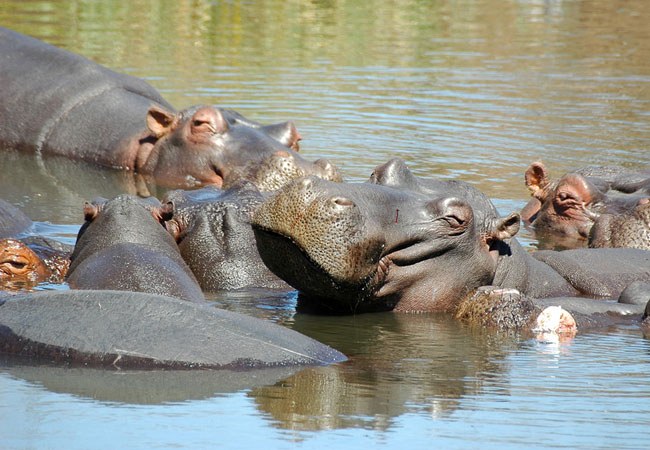
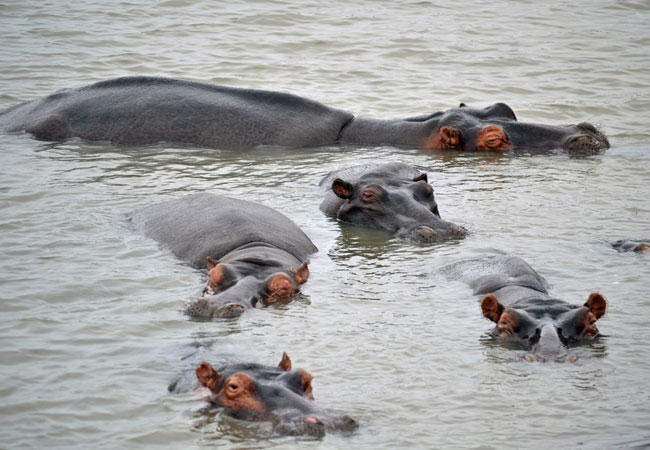
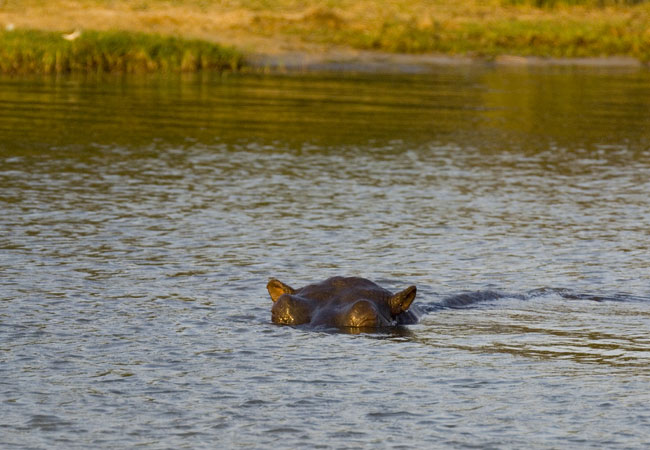
Hippos need water deep enough to cover them, within commuting distance of pasture. They must submerge because their thin, naked skin is vulnerable to overheating and dehydration. They avoid rapids, preferring gently sloping, firm bottom where herds can rest half-submerged and calves can nurse without swimming.
Distribution
Watch the deceptively slow movements of a relaxed hippopotamus at the iSimangaliso Wetland Park in KwaZulu-Natal (2.5 hours from Durban), which has the largest hippo population in South Africa.
They can also be seen at the Hluhluwe-iMfolozi Park (both in Hluhluwe, KZN), and the Kruger National Park (about five hours from Magaliesburg and Johannesburg) in Mpumalanga.
Diet - Herbivore
Herbivorous; a grazer, it eats about 40 kg of preferably short grass nightly, mowing a 50 cm swath with its muscular lips.
Reproduction
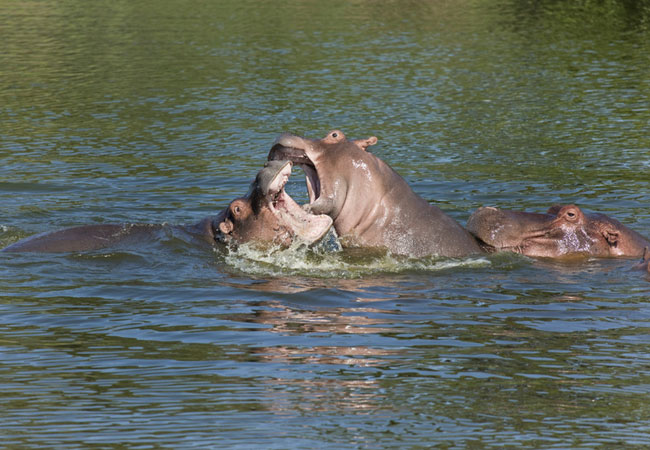
Most mating occurs in the dry season, always in the water, when populations are concentrated. Females conceive at age 9 years and then calve at 2 yearly intervals.
Gestation
Most calves are born in rainy months after an 8 month gestation period.
Life Expectancy
50 years
Predators
- Humans
- Lions
- Crocodiles
Wish you were here?

Additional Reading
- Best Places to Stay on the Elephant Coast, South Africa's True Wilderness Revealed
- Everything You Need to Know to See the iSimangaliso Wetland Park Properly
- Best Places to Stay in Hluhluwe – the doorstep of iSimangaliso Wetland Park & Hluhluwe-iMfolozi
- 10 rivetting reasons to visit the Elephant Coast
Where to see Hippopotamus in their natural habitat?
Want to see hippo in their natural habitat? Previously widespread throughout South Africa, the hippo is now only found in the KwaZulu-Natal, Mpumalanga and Limpopo provinces and has been reintroduced into the Eastern and Western Capes...
- iSimangaliso Wetland Park has South Africa's largest hippo population
- Maputaland Marine Reserves
- Mkuze Game Reserve
- Hluhluwe-iMfolozi Game Reserve
- Karoo Gariep Conservancy