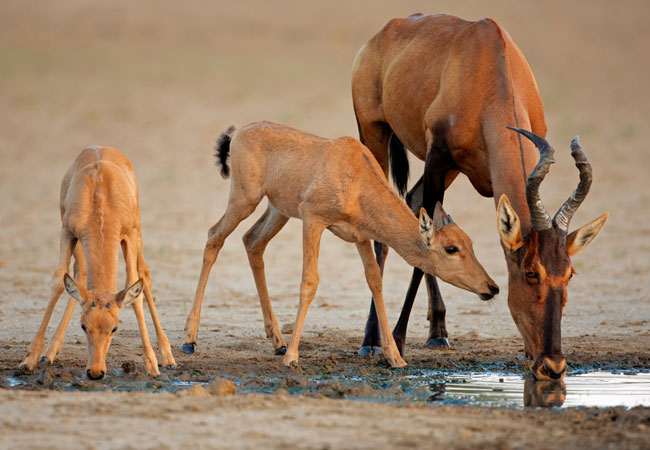
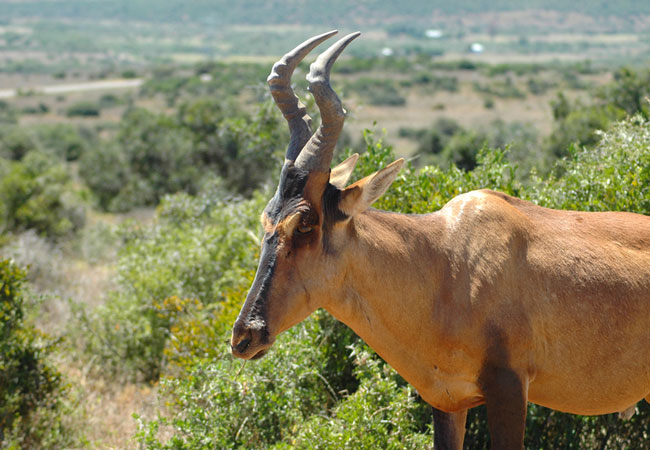
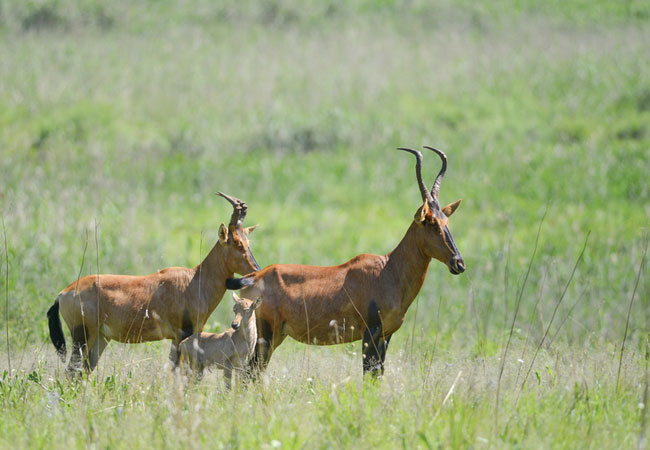
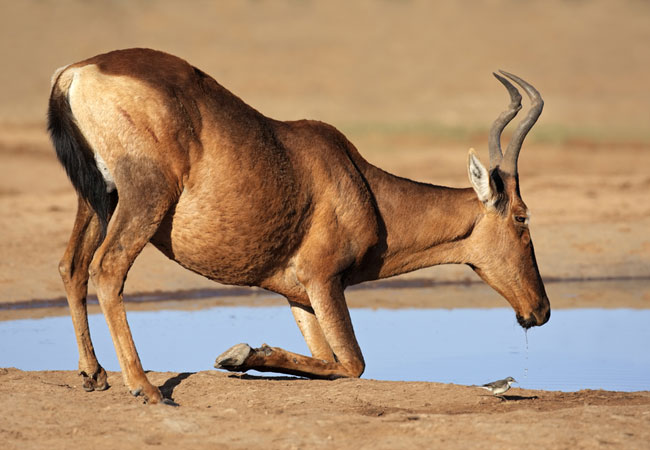
Alcelaphus buselaphus - The Hartebeest
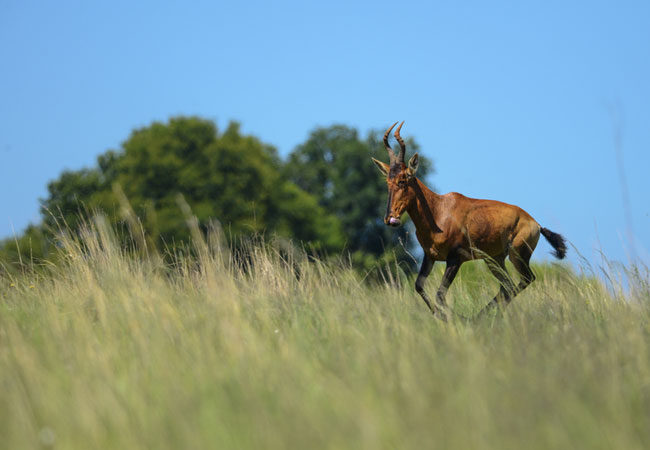
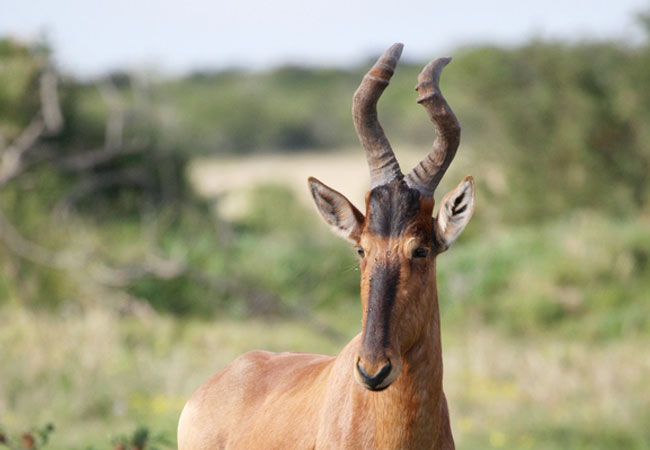
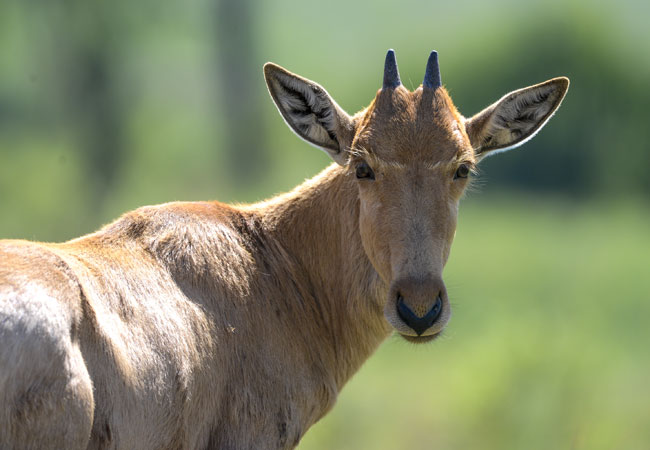
A large, fawn coloured antelope that at first glance seems strangely misshapen and less elegant than other antelopes. The Hartebeest is clumsy in appearance, it is hump shouldered with a sloping back, slim legs and a long, narrow face.
Did you know? Both males and females have heavily ringed horns.
The Hartebeest is one of the fastest antelopes and most enduring runners. These qualities give it the name "hartebeest" (which means tough ox).
Size
48 inches at the shoulder.
Weight
Weight from 165 to 350 pounds.
Habitat
Open plains. Hartebeest are mainly found in medium and tall grasslands, including savannas. They are more tolerant of high grass and woods than other alcelaphines (archetypical plains antelopes).
Distribution
To witness these antelope in the wild, visit the Mountain Zebra National Park (about 1.5 hours from Graaff-Reinet in the Eastern Cape), the Spitskop Nature Reserve just outside Upington in the Northern Cape, the Bontebok National Park (just less than three hours outside Cape Town), the Gondwana Private Game Reserve on the Garden Route, and the Magalies Wild Game Farm in Gauteng.
Diet - Herbivores
Herbivorous grazers; the hartebeest feeds almost entirely on grass, but is not very selective and quite tolerant of poor-quality food. It has suffered from the expansion of cattle raising, as hartebeests and cattle compete for the same food.
Socialisation
The hartebeest is one of the most sedentary antelopes (making it easy to hunt), but it does move around more when larger groupings form during the dry seasons or in periods of drought, to seek water and better grazing.
At other times the females form small groups of five to 12 animals that wander around their home range. Most mature males become solitary and spread out in adjoining territories.
Hartebeests go to water regularly, but in some circumstances territorial males appear to go without drinking for rather long periods. The home ranges are usually densely populated. When a territorial male returns from watering, he may find another in his place.
Reproduction
Single young born any time of the year.
Gestation
Gestation is 8 months.
Life Expectancy
18 years in the wild, up to 20 years in captivity.
Predators
Stay at Hartebeest

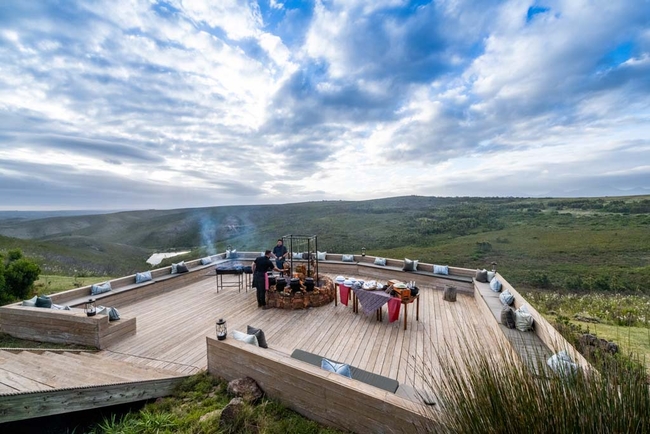
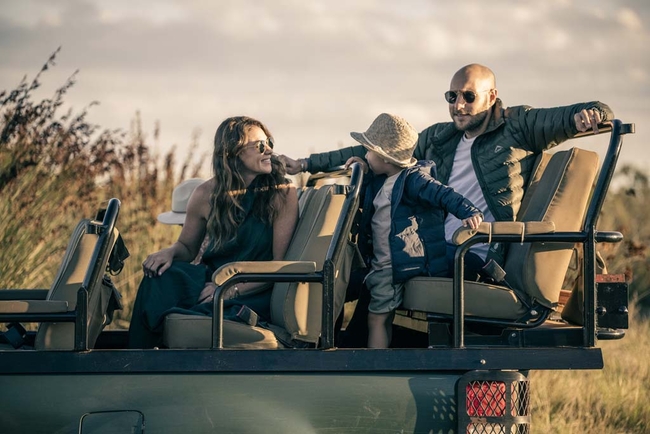
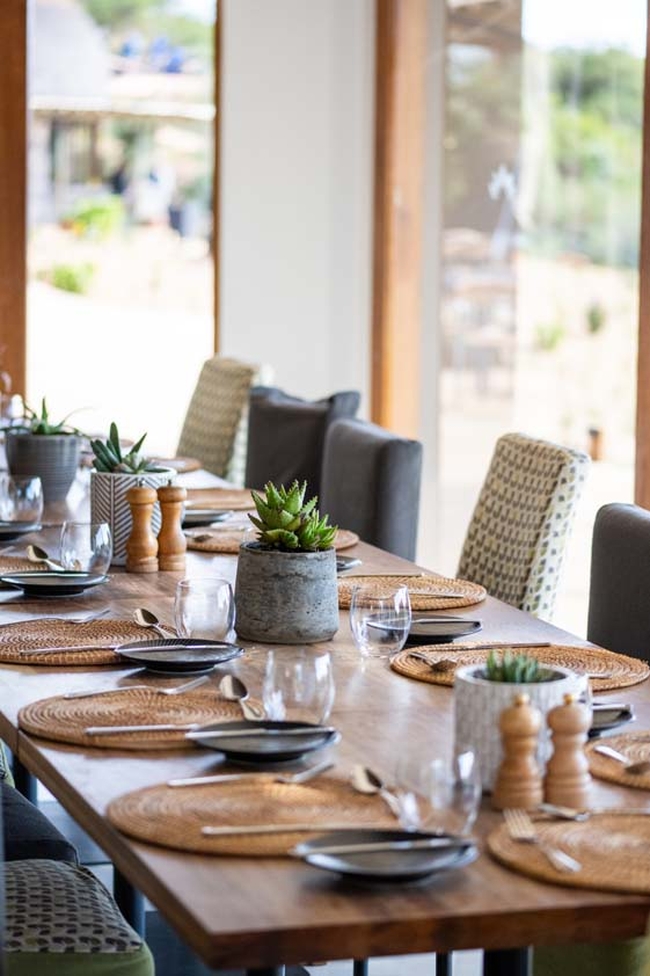
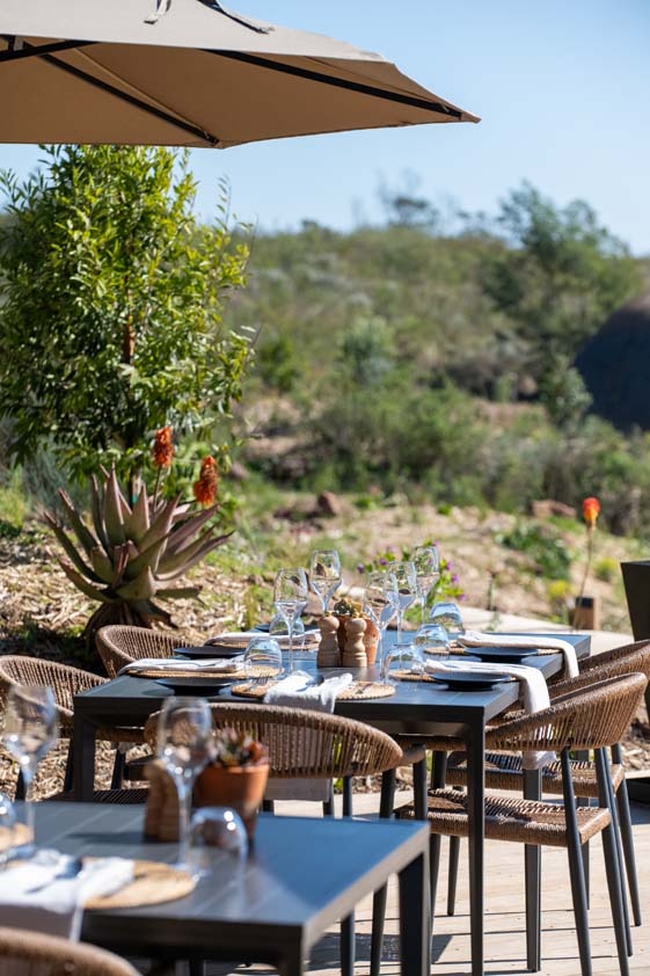
Sleeps 146 people in 32 rooms
Gondwana Game Reserve provides the perfect safari break for Cape Town visitors and residents. Less than a four-hour ...
- free wifi
- all ages welcome
- hot tub
- power stays on
- parking
- swimming pool
- aircon
- airport transfers
Rates
on request
Additional Reading
You might also be interested inWhere to see Hartebeest in their natural habitat?
Want to see hartebeest in their natural habitat? In South Africa, find hartebeest in many reserves and parks, including...