Malari Risk Areas in South Africa
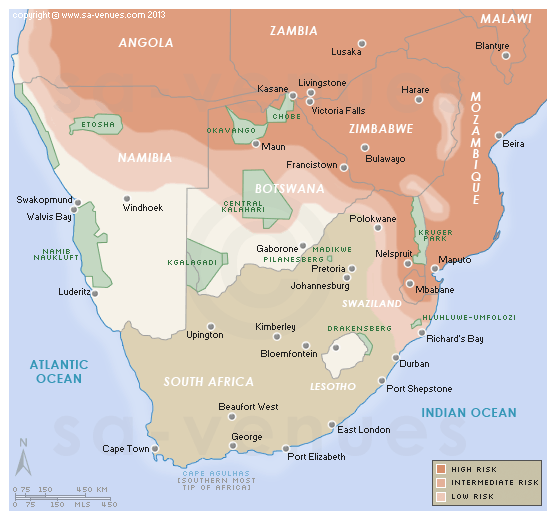
Malaria is endemic in the Lowveld of Mpumalanga and in Limpopo (including the Kruger Park and private game reserves which make these provinces so popular with travellers). In KwaZulu Natal malaria is endemic on the Maputaland coast. So if you are travelling to the far north of South Africa, please consult a heath-care professional for the latest advice on malaria prophylaxis as it changes regularly. City centres like Johannesburg, Durban and Cape Town are free from malaria and safe for travellers of all ages.
Intermediate Risk Areas
In the intermediate risk areas of Kosi Bay, Sodwana Bay, Mkuze Game Reserve and St Lucia Lake (not the town of St Lucia and the river mouth), the use of anti-malarial drugs is advisable only for high risk people from October to May. Check with your physician or travel clinic.
Low Risk Areas
In low risk areas no anti-malaria drugs are necessary. In the North West Province and the Northern Cape along the Molopo and Orange Rivers, including the Augrabies Falls and the Kgalagadi Transfrontier Park, malaria is only occasionally locally transmitted. It is not necessary to take anti-malaria drugs when visiting these areas, but precautionary measures to prevent mosquito bites should be taken.
Precautions and Advice
Visitors to high risk Malaria areas should personally take precautions between dawn and dusk.
- apply insect repellent to exposed skin
- if possible remain indoors
- close windows and doors at night unless they are screened
- spray an aerosol insecticide inside the sleeping area
- burn mosquito coils and mosquito mats in sleeping areas
- sleep under a mosquito-proof bed-net
- wear long-sleeved clothing, trousers and socks if outdoors during this time
- in high-risk areas (Kruger Park, northern parts of Limpopo and northern parts of KwaZulu Natal) the use of anti-malaria drugs is recommended from October to May.
People at particular risk who should take extra precautions are:
- children under 5
- adults over 65
- pregnant women
- people on long term steroids
- people receiving chemotherapy
- people with Aids / HIV, porphyria or epilepsy
- people who have had their spleens removed
- chronically ill patients
Taking Malaria Prophylactics
If you do decide to take malaria prophylaxis, it is essential to take the drugs according to the directions on the package insert. You need to start a week or two before entering the malaria-endemic area and it is also essential that you continue to take the drugs for four weeks after leaving the malaria risk area. Please consult your physician or a registered health-care professional about the possible side-effects of the drugs.
Pre-cautions
Some medical conditions are contra-indications for malaria prophylactic drugs, so consult your regular doctor if you have any pre-existing conditions. If you are pregnant it is advisable to avoid malaria areas but you can still have a great holiday (including some excellent game viewing) without setting a foot in a malaria-endemic area.
After Travelling
It is important to note that a person may still contract malaria even though all precautionary measures have been taken. If any flu-like symptoms namely, headache, fever, muscular and joint pains, sweating, shivering attacks, nausea, diarrhoea and fatigue occur after a visit to a malaria risk area (and for up to six months there-after) consult a doctor immediately and advise the doctor of your visit to the malaria area in order to ensure that malaria is diagnosed and treated in time. Malaria attacks can occur up to six months after leaving a malaria area.
Additional Reading
- Big 5 malaria-free game reserves in South Africa
- 20 most beautiful natural places in South Africa
- South African adventures that will change your life
- South Africa marine protected areas
- South Africa's peace parks – top 5 parks that transcend borders
Also see
Wish you were here?

Tips & Information for Tourists
- Travelling to South Africa? We make it easy for you to plan your trip online. We have some useful tips for tourists and then start planning your trip with our introduction to South Africa.
- By Province
- Getting to South Africa
- Getting Around in South Africa
- South Africa's Climate
- Exchange Rates and Currency
- Maps / Atlas
- Malaria Risk Areas
- Wildlife
- Birdlife
- Plant Life
- Languages and Culture
- South African Cuisine
- Top Attractions in South Africa
- Popular Tourist Routes
- Travel & Tourism Resources
- Find a Hotel
SA-Venues.com® has been assisting travellers with their South Africa travel plans since 1999, and is the largest, independent online travel guide for South Africa available in both English and German.
SA-Venues.com © 1999-2025. All Rights Reserved. Find and book hotels and accommodation in South Africa. Sitemap